
1. Introduction: A Man Who Chose Action Over Comfort
History remembers many leaders, but only a few leave behind a legacy so powerful that generations continue to debate, admire, and learn from them. Among those extraordinary figures stands Subhas Chandra Bose, a man whose courage, determination, and vision made him one of the most influential leaders of India’s freedom struggle.
While many freedom fighters challenged British rule through protests and political movements, Bose believed that freedom had to be seized through action. His life was not a simple story of politics; it was a tale of sacrifice, daring escapes, international diplomacy, and an unwavering commitment to India’s independence.
Even today, his famous slogan, “Give me blood, and I will give you freedom,” continues to inspire millions.
2. The Early Life of Subhas Chandra Bose
Subhas Chandra Bose was born on January 23, 1897, in Cuttack, Odisha, into a well-educated and respected family. His father, Janakinath Bose, was a successful lawyer, and his family hoped he would build a prestigious career.
From an early age, Bose displayed remarkable intelligence and discipline. He excelled in academics and was deeply influenced by Indian culture, spirituality, and the teachings of Swami Vivekananda.
As a young student, he often questioned injustice and believed that every nation deserved the right to govern itself. These ideas would later shape his revolutionary path.
3. A Brilliant Career Left Behind for India
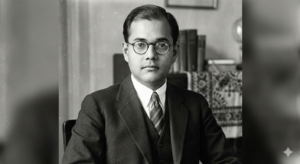
Like many educated Indians of his time, Bose appeared destined for a successful government career. He traveled to England and passed the prestigious Indian Civil Service (ICS) examination, one of the toughest exams in the world.
For most people, this achievement would have been the beginning of a comfortable life.
But Bose faced a difficult question.
How could he serve a government that ruled his own country?
Unable to reconcile his conscience with British authority, he resigned from the ICS before taking up the post. It was a bold decision that shocked many people.
He chose uncertainty over comfort and sacrifice over personal success.
4. Entering the Freedom Movement
Upon returning to India, Bose joined the growing independence movement. He quickly emerged as a charismatic leader with strong organizational abilities.
He worked closely with prominent leaders and became involved in political campaigns against British rule. His speeches energized young Indians who were frustrated with colonial oppression.
However, Bose believed that India needed a more aggressive approach to achieve freedom. While he respected many national leaders, he often disagreed with strategies that relied solely on peaceful negotiations.
This difference in vision would later create important divisions within the independence movement.
5. The Rise of Subhas Chandra Bose as a National Leader
By the 1930s, Bose had become one of the most popular leaders in India.
Despite repeated arrests by British authorities, his influence continued to grow. Every imprisonment seemed to strengthen his reputation.
In 1938, he was elected President of the Indian National Congress. The following year, he won the election again despite facing opposition from powerful leaders within the party.
His victory demonstrated the immense support he enjoyed among ordinary Indians, especially the youth.
Bose believed that India should prepare itself for complete independence and take advantage of global events to weaken British control.
6. Why Bose and Gandhi Followed Different Paths
One of the most fascinating aspects of India’s freedom struggle was the contrast between Bose and Mahatma Gandhi.
Both wanted India to be free.
Both loved their country deeply.
Yet their methods were dramatically different.
Gandhi believed in non-violence and civil disobedience as the most effective means of resistance. Bose, while respecting Gandhi, felt that the British Empire would not leave India voluntarily.
He believed that military pressure and international alliances could accelerate independence.
Their disagreements reflected two different visions of how freedom could be achieved.
Despite these differences, Bose referred to Gandhi as the “Father of the Nation,” showing the respect that existed between them.
7. The Great Escape That Shocked the British
By 1940, British authorities considered Bose a major threat.
He was placed under house arrest in Calcutta.
Most people assumed he was trapped.
But Bose had other plans.
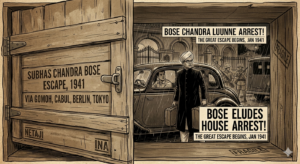
In one of the most dramatic episodes in Indian history, he escaped from his heavily guarded residence in January 1941. Disguised and traveling secretly, he managed to evade British surveillance.
His journey took him across dangerous routes through Afghanistan and eventually into Europe.
The British government was stunned.
A man they believed they controlled had vanished.
This daring escape transformed Bose into a legendary figure.
8. Building International Support for India’s Freedom
Bose understood that defeating the British Empire would require global support.
During World War II, he sought assistance from countries opposed to Britain. His goal was simple: use international conflicts to advance India’s independence.
He traveled extensively, met foreign leaders, and worked tirelessly to build support for the Indian cause.
While historians continue to debate some of his wartime alliances, there is no doubt about his objective.
Everything he did was driven by his desire to see India free from colonial rule.
9. The Formation of the Indian National Army (INA)
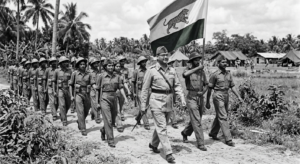
One of Bose’s greatest achievements was his leadership of the Indian National Army (INA), also known as the Azad Hind Fauj.
The INA consisted largely of Indian soldiers who wanted to fight for their nation’s independence.
Under Bose’s leadership, the army gained renewed energy and purpose.
He inspired thousands by declaring:
“Delhi Chalo” (March to Delhi).
The slogan became a powerful symbol of resistance against British rule.
For the first time, many Indians saw an organized military force fighting explicitly for an independent India.
10. How the Azad Hind Government Inspired Millions
In 1943, Bose established the Provisional Government of Free India, known as Azad Hind.
This government represented a bold declaration that India deserved complete sovereignty.
Though it operated under difficult wartime conditions, it provided a powerful psychological boost to the independence movement.
For millions of Indians, it demonstrated that freedom was not merely a dream but a realistic goal.
Bose gave people confidence that British rule could be challenged on the international stage.
11. Women in the INA: A Revolutionary Vision
One of Bose’s most progressive contributions was his belief in the active participation of women in the freedom struggle.
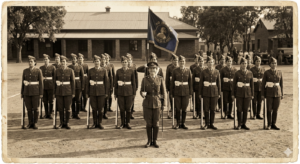
He established the Rani of Jhansi Regiment, an all-women military unit named after the legendary queen Lakshmibai.
At a time when many societies restricted women’s roles, Bose encouraged them to become leaders, soldiers, and patriots.
His vision challenged traditional assumptions and expanded opportunities for women within the nationalist movement.
12. The Mysterious Disappearance of Subhas Chandra Bose
Perhaps no chapter in Bose’s life generates more discussion than his disappearance.
According to official accounts, he died in a plane crash in August 1945.
However, questions and controversies emerged almost immediately.
Many supporters refused to believe that such a determined leader had died.
Over the decades, numerous theories appeared regarding his fate. Investigations, commissions, and researchers have continued to examine the mystery.
Even today, debates surrounding his final days remain one of modern India’s most intriguing historical puzzles.
13. The Legacy That Survived Beyond Independence
Although Bose did not live to witness India’s independence in 1947, his influence extended far beyond his lifetime.
Many historians argue that the activities of the INA significantly affected British confidence in maintaining control over India.
The loyalty of Indian soldiers had long been a pillar of British rule. The rise of the INA raised concerns about that loyalty and altered political calculations.
His efforts added another dimension to the freedom movement and demonstrated that resistance could take many forms.
14. Lessons We Can Learn from Subhas Chandra Bose
The life of Bose offers valuable lessons that remain relevant today:
- Courage often requires sacrifice.
- Leadership demands conviction during difficult times.
- Great achievements begin with a clear purpose.
- Education is valuable when combined with action.
- Patriotism means serving a cause larger than oneself.
- Determination can overcome enormous obstacles.
His journey reminds us that meaningful change rarely comes from comfort zones.
15. Why Subhas Chandra Bose Still Matters Today
More than seven decades after India’s independence, Bose continues to inspire students, leaders, soldiers, and ordinary citizens.
His life represents resilience, discipline, and commitment to a national cause.
Whether one agrees with all his strategies or not, his dedication to India’s freedom is undeniable.
He dreamed of an India that was strong, self-reliant, and united.
That dream continues to resonate with generations who seek inspiration from the past.
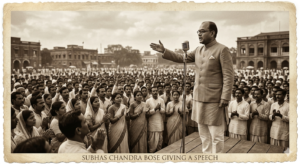
Conclusion: The Revolutionary Who Refused to Give Up
The story of Subhas Chandra Bose is not merely the story of a freedom fighter. It is the story of a man who challenged one of the most powerful empires in the world and refused to accept limitations imposed by circumstances.
He gave up comfort, endured imprisonment, crossed continents, built an army, inspired millions, and dedicated every ounce of his energy to the cause of Indian independence.
History remembers him not because he followed an easy path, but because he chose a difficult one.
And that is why the name Subhas Chandra Bose continues to echo through India’s history—a symbol of courage, determination, and an unbreakable belief in freedom.
Important Internal Link
-
Related Reading: The History of the East India Company in India
Long before Subhas Chandra Bose challenged British rule, the foundations of colonial power in India were established by the East India Company. Understanding how a trading company gradually took control of a vast nation helps explain the challenges that later freedom fighters like Bose sought to overcome. Tap here for read.
-
Related Reading: Partition of India 1947
Although Subhas Chandra Bose did not live to witness India’s independence, the end of British rule brought one of the most dramatic events in South Asian history—the Partition of India. Millions of people were affected as new borders reshaped the subcontinent forever. Tap Here for read.
-
Related Reading: The Indus Valley Civilization
India’s story did not begin with the freedom struggle. Thousands of years before Bose’s time, the Indus Valley Civilization built remarkable cities, advanced drainage systems, and thriving trade networks, laying the foundations of one of the world’s oldest civilizations. Tap Here for read.
-
If you would like to explore more about the life, political journey, and legacy of Netaji Subhas Chandra Bose, you can read this detailed biography from Encyclopaedia Britannica.
External Link:
Subhas Chandra Bose Biography – Britannica