
Introduction
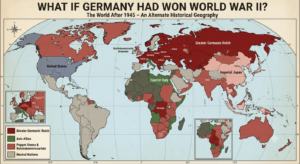
Few questions in alternate history generate as much fascination and debate as this one: what would the world look like today if Nazi Germany had defeated the Allied powers in World War II? This counterfactual scenario has inspired novels, films, academic papers, and countless historical discussions because it forces us to examine just how fragile the outcome of the war truly was.
By the summer of 1942, Germany and its Axis partners controlled or dominated most of continental Europe, North Africa, and vast stretches of the Soviet Union. The war’s outcome was far from predetermined. Had a handful of pivotal battles or strategic decisions gone differently, the twentieth century — and the world we live in today — could look entirely unrecognizable.
This article explores the key turning points that would have needed to shift, how Europe and the rest of the world might have been reorganized, and the profound political, technological, and humanitarian consequences of a German victory.
The Critical Turning Points Germany Needed to Win
Historians generally agree that Germany’s path to victory depended on a combination of the following factors going differently than they actually did.
1. Britain Exits the War (1940)
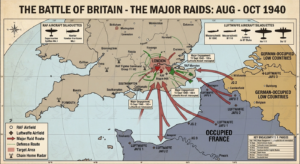
After France fell in June 1940, Britain stood alone against Germany. Several outcomes could have removed Britain from the conflict entirely:
- A negotiated peace, in which the British government accepted German dominance over continental Europe in exchange for retaining its empire.
- A successful German invasion, contingent on winning the Battle of Britain and achieving air superiority over the English Channel.
- A change in British leadership, replacing Winston Churchill’s government with one more amenable to negotiation.
Without British resistance, Germany would have avoided a prolonged two-front commitment and could have redirected enormous military resources toward the Soviet Union.
2. Victory on the Eastern Front
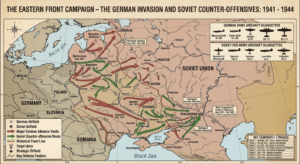
Operation Barbarossa, launched in June 1941, was ultimately Nazi Germany’s most consequential failure. A different outcome on the Eastern Front might have hinged on:
- Capturing Moscow before the onset of winter in 1941, potentially collapsing Soviet command and logistics.
- Securing the oil fields of the Caucasus, which would have solved Germany’s chronic fuel shortages.
- Avoiding the catastrophic losses at Stalingrad, widely regarded as the war’s turning point
3. Keeping the United States Out of the Conflict
Germany’s declaration of war on the United States in December 1941, following the Japanese attack on Pearl Harbor, brought the full industrial and military weight of America into the European theater. Had Hitler avoided this declaration, Germany could have concentrated its resources on Britain and the Soviet Union without facing an additional, industrially dominant adversary.
A Reimagined Political Map of Europe
Nazi-Dominated Territory
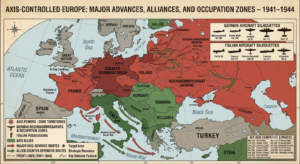
Under a German victory, most of continental Europe would likely have fallen under direct German control or governance through puppet regimes. This would probably have included:
- France (divided into occupied and collaborationist zones)
- Poland
- The Netherlands and Belgium
- Norway and Denmark
- Large portions of Eastern Europe and the Balkans
Lebensraum and Eastern Expansion
Central to Nazi ideology was the concept of Lebensraum — “living space” — which envisioned massive German colonization of Eastern Europe at the expense of Slavic populations. Historians believe this policy, had it been fully realized, would have resulted in:
- The forced relocation and displacement of tens of millions of people.
- Large-scale German settlement in conquered Eastern territories.
- The systematic dismantling of existing national governments and political institutions.
The Holocaust in a Nazi-Dominated World
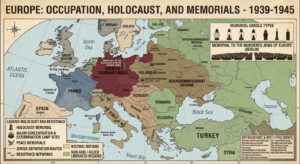
Perhaps the most sobering aspect of this counterfactual is what a German victory would have meant for the Holocaust. The genocide of European Jews, along with the persecution of Roma people, disabled individuals, political dissidents, and other groups deemed “undesirable” by the regime, was already well underway by 1942.
Without an Allied victory to halt and expose these atrocities, most historians agree the Holocaust would likely have continued and potentially expanded, extending Nazi racial policy across an even larger portion of Europe and beyond. This remains one of the most chilling implications of any scenario involving a German victory.
Possible Fates of Britain
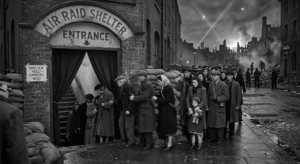
Several distinct scenarios have been proposed by historians and alternate-history writers regarding Britain’s fate:
Scenario A — Negotiated Peace: Britain remains nominally independent but accepts German supremacy across continental Europe, retaining its overseas empire in a diminished capacity.
Scenario B — Successful Invasion: A German invasion (Operation Sea Lion, in reality never launched) succeeds, ending organized British resistance and installing a collaborationist government.
Scenario C — Government in Exile: The British monarchy and government relocate to Canada or another part of the Commonwealth, continuing the fight from abroad while the home islands are occupied.
The United States in a German-Dominated World
Even in a scenario where Germany achieved dominance over Europe, most historians agree the United States would have remained a major global power, protected by the Atlantic Ocean and its own vast industrial base. However, the global order would have shifted dramatically:
- Europe would exist under German political and economic domination.
- Global geopolitics would likely reorganize around a rivalry between Germany and the United States.
- A prolonged period of tension — a different kind of “Cold War” — could have emerged between a Nazi-dominated Europe and the democratic West.
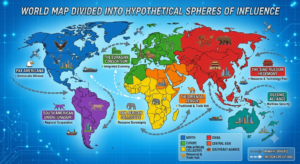
Japan’s Sphere of Influence
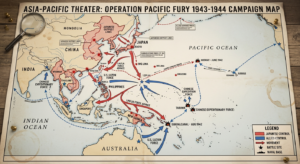
As Germany’s principal ally, Imperial Japan would likely have consolidated control over:
- China and large parts of continental East Asia
- Southeast Asia
- Significant portions of the Pacific
In this scenario, the world could have effectively been divided into competing German and Japanese spheres of influence, each governing according to its own imperial ambitions.
Technology and Scientific Development
A common assumption is that technology would have advanced more rapidly under Nazi rule, but historians remain divided on this point.
Potential accelerations:
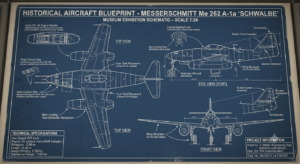
- Faster development of jet aircraft technology, building on Germany’s early lead with the Messerschmitt Me 262.
- Continued advancement of missile technology stemming from the V-2 rocket program.
- Heavily militarized research and development priorities.
Likely setbacks:
- Severe restrictions on scientific freedom and independent inquiry.
- The permanent loss of contributions from Jewish and other persecuted scientists who fled or were killed under Nazi rule — a group that included figures instrumental to Allied technological and scientific achievements.
On balance, many historians argue that the ideological rigidity and racial persecution embedded in Nazi policy would have ultimately hindered, rather than helped, long-term scientific progress.
A Different Kind of Cold War
In the actual historical timeline, the second half of the twentieth century was shaped by the Cold War between the United States and the Soviet Union. In a world where Germany won World War II, this rivalry might instead have unfolded as a standoff between Nazi Germany and the United States, potentially featuring:
- Competing nuclear weapons programs
- A prolonged global ideological conflict between fascism and democracy
- Persistent military tension and proxy conflicts across the globe
Consequences for Colonial Empires
A German victory would likely have altered the pace and shape of global decolonization. European colonial systems, propped up by a dominant Nazi Germany, might have persisted considerably longer than they did historically, resulting in:
- Delayed independence movements throughout Africa and Asia.
- Slower dismantling of colonial administrative structures.
- A fundamentally different map of national borders across the globe by the late twentieth century.
Conclusion
Had Nazi Germany won World War II, the modern world would almost certainly be unrecognizable. Europe might have existed under decades of totalitarian rule, the Holocaust could have continued on an even larger scale, and a new global rivalry between Germany and the United States might have defined international relations for generations.
While no one can say with certainty exactly how history would have unfolded, exploring this scenario underscores just how consequential a handful of battles, decisions, and turning points were in shaping the world we know today. It also serves as a sobering reminder of the human cost of the actual war — and why the Allied victory remains one of the most significant turning points in modern history.
This article is intended for educational and historical discussion purposes. All scenarios described are speculative and represent analysis based on historical trends, not factual outcomes.
Important Article as per History Decoded Hub.
1. The outcome of World War II also shaped the decades-long Cold War that eventually ended with the Fall of the Berlin Wall in 1989. That historic event symbolized the collapse of communist rule in Eastern Europe and marked the beginning of a new era of European unity. To understand how the real post-war world evolved, read our detailed article on The Fall of the Berlin Wall: How One Night Ended the Cold War.
2. The outcome of World War II also reshaped the international order, paving the way for institutions designed to prevent future global conflicts. Among the most significant was the United Nations, established to promote peace, security, and international cooperation. To learn more about the historical importance of its founding and how it transformed global diplomacy, read our article June 26 in History: How World War I and the United Nations Changed the World.
Recommended External Links
- Encyclopaedia Britannica – World War II
- Best overall reference for World War II.