
Introduction
History is often remembered through moments that changed the course of a nation. Some events inspire pride and unity, while others leave behind painful questions that continue to echo for generations. Among the most controversial and emotionally charged chapters in modern Indian history is Operation Blue Star, a military operation carried out in June 1984 inside the holiest shrine of Sikhism, the Golden Temple in Amritsar.
Even decades later, Operation Blue Star remains a subject of debate, grief, and reflection. For some, it was a necessary action taken by the government to restore law and order. For others, it represented a deep wound inflicted upon the Sikh community. Understanding this event requires looking beyond political slogans and emotional reactions. It requires examining the historical circumstances, the people involved, the decisions made, and the consequences that followed.
This is the story of how a growing political crisis led to one of the most significant military operations in independent India’s history.
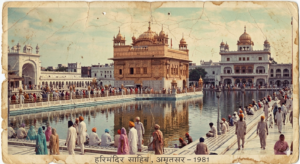
Punjab in the Years Before the Crisis
To understand Operation Blue Star, one must first understand the atmosphere in Punjab during the late 1970s and early 1980s.
Punjab was one of India’s most prosperous states. The Green Revolution had transformed its agriculture, making it a key contributor to the country’s food production. Yet beneath this success lay political tensions, economic concerns, and disputes over regional autonomy.
Several Sikh political leaders argued that Punjab deserved greater control over its resources and governance. These demands were expressed through the Anandpur Sahib Resolution, a document that sought increased autonomy for states within India’s federal structure.
While many of these demands were political and constitutional in nature, the growing tensions created an environment where more radical voices began gaining attention.
The situation gradually became more complicated as protests, disagreements, and acts of violence increased throughout the state.
The Rise of Jarnail Singh Bhindranwale
At the center of this unfolding story stood a charismatic and controversial figure: Jarnail Singh Bhindranwale.
Bhindranwale was a Sikh preacher who gained popularity among many Sikhs, particularly young people who believed that Sikh values and identity were under threat. His speeches emphasized religious discipline, traditional Sikh teachings, and the preservation of Sikh culture.
Supporters viewed him as a defender of Sikh rights. Critics accused him of encouraging extremism and contributing to rising violence.
As his influence grew, Bhindranwale became one of the most powerful figures in Punjab politics. His presence increasingly shaped the political landscape of the state.
By the early 1980s, numerous violent incidents—including assassinations, attacks on police officers, and communal tensions—had heightened fears across Punjab. The Indian government believed that militant groups were becoming stronger and that law and order was rapidly deteriorating.
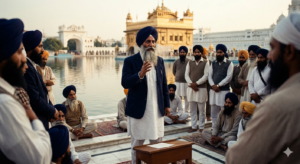
The Golden Temple Becomes the Center of the Conflict
The situation reached a critical stage when Bhindranwale and his followers moved into the Golden Temple complex in Amritsar.
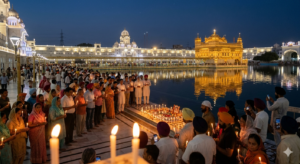
The Golden Temple, also known as Harmandir Sahib, is the holiest shrine in Sikhism. Millions of Sikhs around the world regard it as a place of profound spiritual significance.
Within the complex stood the Akal Takht, an important institution of Sikh authority.
According to government reports, armed militants began using parts of the complex as a base of operations. Weapons were allegedly stockpiled, defensive positions were established, and militants fortified sections of the area.
Supporters of Bhindranwale argued that he had sought refuge in the complex and that the government’s portrayal exaggerated the threat. The government, however, maintained that armed militants were operating from within the shrine and that immediate action had become unavoidable.
As tensions increased, negotiations repeatedly failed.
India stood on the edge of a major confrontation.
Operation Blue Star: The Military Decision
By mid-1984, Prime Minister Indira Gandhi and her government faced an increasingly difficult situation.
Authorities believed that militant violence was escalating and that Punjab was becoming unstable. Several attempts at negotiation had failed to produce a lasting solution.
Faced with these circumstances, the government decided to launch a military operation aimed at removing armed militants from the Golden Temple complex.
The operation was given the code name Operation Blue Star.
The timing was particularly sensitive. The operation began in early June 1984, during a period when thousands of pilgrims had gathered at the shrine to mark an important Sikh religious observance.
This decision would later become one of the most debated aspects of the entire operation.
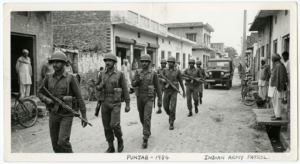
The Battle Inside the Golden Temple Complex
On the night of June 5, 1984, Indian Army units moved toward the Golden Temple complex.
What many expected to be a swift operation soon turned into an intense and deadly battle.
The army encountered stronger resistance than anticipated. Militants had fortified positions within the complex and were equipped with firearms and defensive structures.
Gunfire echoed through the sacred grounds.
Soldiers advanced under difficult conditions while trying to minimize damage to religious structures. However, the fighting became increasingly fierce.
As the battle continued, tanks and armored vehicles were eventually deployed against fortified positions around the Akal Takht.
The operation lasted several days.
When the fighting ended, Bhindranwale was among those killed.
The army declared the mission successful and announced that militant strongholds within the complex had been eliminated.
Yet the cost of that success would become a subject of controversy for decades.
Casualties and Destruction
One of the most disputed aspects of Operation Blue Star concerns the number of casualties.
Official figures reported hundreds of deaths, including soldiers, militants, and civilians. Independent estimates and various observers have often suggested higher numbers.
Because many pilgrims were present at the time of the operation, determining the exact casualty count remains difficult.
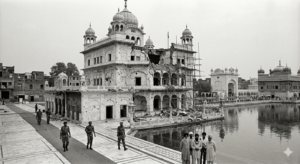
The Akal Takht suffered severe damage during the battle. Images of the destruction shocked Sikhs across India and around the world.
For many members of the Sikh community, the sight of military action inside their holiest shrine was deeply painful.
The emotional impact extended far beyond Punjab.
Families mourned lost relatives, communities struggled with grief, and trust between many Sikhs and the government suffered significant damage.
Why Operation Blue Star Remains Controversial
More than four decades later, Operation Blue Star continues to generate debate.
Those who support the operation argue that the government faced an extraordinary security challenge. They contend that armed militants had transformed a sacred site into a fortified base and that decisive action was necessary to restore order.
Others argue that alternative solutions should have been pursued more aggressively. Critics question whether negotiations were exhausted and whether military force inside such an important religious site could ever be justified.
The controversy is further complicated by differing interpretations of events, conflicting casualty estimates, and competing political narratives.
As a result, Operation Blue Star is remembered very differently by different groups.
The Assassination of Indira Gandhi
The consequences of Operation Blue Star did not end when the military operation concluded.
On October 31, 1984, Prime Minister Indira Gandhi was assassinated by two of her Sikh bodyguards.
The assassination was widely viewed as retaliation for Operation Blue Star.
The news stunned India.
A sitting Prime Minister had been killed by members of her own security team.
The event triggered a chain reaction that would lead to another tragedy.
The Anti-Sikh Riots of 1984
Following Indira Gandhi’s assassination, anti-Sikh violence erupted in several parts of India, particularly in Delhi.
Thousands of Sikhs were attacked, homes and businesses were destroyed, and entire communities lived in fear.
The riots remain one of the darkest chapters in modern Indian history.
For many Sikhs, the trauma of Operation Blue Star became inseparable from the violence that followed.
Families who had already been affected by the military operation now faced another devastating wave of suffering.
The scars left by these events continue to shape memories and discussions today.
The Long-Term Impact on India
Operation Blue Star had consequences that extended far beyond 1984.
The operation intensified tensions in Punjab and contributed to years of insurgency and violence during the late 1980s and early 1990s.
Thousands of civilians, police officers, security personnel, and militants lost their lives during this turbulent period.
At the same time, the Indian government expanded security measures and strengthened efforts to combat separatist movements.
Over time, Punjab gradually returned to stability. Economic growth resumed, democratic institutions remained intact, and everyday life slowly normalized.
Yet the memories of 1984 never fully disappeared.
For many families, the events remain deeply personal rather than merely historical.
Lessons from Operation Blue Star
History is not simply a record of what happened. It is also an opportunity to learn.
Operation Blue Star demonstrates how political disputes can escalate when dialogue breaks down and trust disappears.
It highlights the dangers of polarization, extremism, and prolonged conflict.
The episode also reminds governments of the importance of balancing security concerns with religious sensitivities and civil liberties.
Most importantly, it shows the human cost of unresolved tensions.
Behind every political decision are ordinary people whose lives may be changed forever.
How Historians View the Event Today
Modern historians continue to study Operation Blue Star from multiple perspectives.
Some focus on the security challenges facing the Indian government. Others examine the political mistakes that contributed to the crisis. Many explore the experiences of civilians caught in the middle.
What is clear is that no single interpretation fully captures the complexity of the event.
Operation Blue Star was not merely a military operation. It was the culmination of years of political conflict, social tensions, religious sensitivities, and strategic decisions.
Understanding it requires acknowledging all of these dimensions rather than reducing the event to a simple narrative of heroes and villains.
Conclusion
Operation Blue Star remains one of the most significant and controversial events in modern Indian history. Conducted in June 1984, the operation sought to remove armed militants from the Golden Temple complex, but its consequences extended far beyond the battlefield.
The deaths, destruction, assassination of Indira Gandhi, anti-Sikh riots, and years of unrest that followed ensured that the event would leave a lasting mark on the nation.
More than forty years later, Operation Blue Star continues to evoke strong emotions. It is remembered as a story of conflict, faith, politics, sacrifice, and tragedy.
For anyone seeking to understand contemporary India, studying Operation Blue Star is essential—not only because of what happened in 1984, but because of the lessons it offers about leadership, dialogue, and the fragile relationship between security and national unity.
The events of 1984 demonstrated how communal tensions can leave deep scars on a nation. Similar challenges were witnessed during the Partition of India in 1947, when millions of people experienced displacement, violence, and uncertainty. Tap Here
India’s history is filled with remarkable achievements and difficult challenges. From the advanced cities of the Indus Valley Civilization to the political crises of the modern era, each chapter has shaped the nation’s identity. Tap Here
For readers interested in exploring additional details and historical records, you can learn more about Operation Blue Star through the Wikipedia article on the subject.