
Introduction
“What made an old philosopher so dangerous that Athens decided to execute him?” In ancient Athens, one man became famous not for wealth or power, but for asking questions that challenged society itself. That man was Socrates.
He encouraged people to think deeply about truth, wisdom, and morality instead of blindly following traditions. His fearless ideas inspired many young minds but also created powerful enemies.
Although Socrates never wrote a book, his teachings changed philosophy forever and continue to influence the modern world even today.
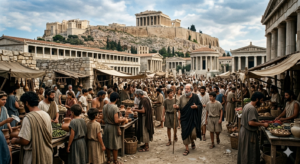
1. The Streets of Athens
“Under the burning Greek sun, merchants shouted across crowded markets while politicians argued in public squares.” Merchants sold goods in busy markets. Politicians gave speeches in public squares. Soldiers marched through dusty roads while poets entertained large audiences.
Athens was one of the greatest cities in the ancient world.
And among all those important people walked a man who looked completely ordinary.
Barefoot.
Poorly dressed.
Always asking questions.
That man was Socrates.
At first glance, nobody would have guessed he would become one of the most influential thinkers in human history.
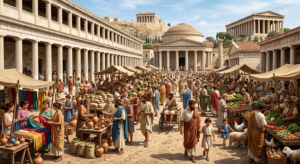
2. A Man Unlike Others
Socrates did not chase wealth.
He did not care about expensive clothes or political power.
What interested him most was the human mind. “While others chased fame and wealth, Socrates spent hours talking to ordinary people.”
Why do people lie?
What makes someone truly wise?
Can a person live a good life without understanding themselves?
These questions shaped his entire life.
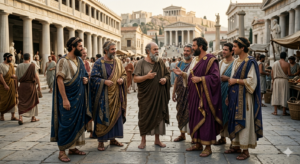
3. His Early Childhood
Socrates was born around 470 BCE in Athens.
His father worked as a sculptor. His mother was a midwife.
Unlike many famous Greek thinkers, Socrates did not grow up in luxury.
He came from a simple background.
That ordinary beginning made him different from many wealthy intellectuals of Athens.
4. Learning About the World
As a young man, Socrates probably learned sculpture from his father.
Some ancient stories even claim he created statues during his youth.
But slowly, his interest shifted.
Instead of shaping stone, he became fascinated by shaping ideas.
He wanted to understand people more than objects.
5. Athens During His Lifetime
Athens was powerful during Socrates’ life.
Art, politics, philosophy, and science were growing rapidly.
People admired intelligence and public debate.
But many citizens cared more about sounding smart than actually seeking truth.
Socrates noticed that problem clearly.
6. The Sophists
During this time, teachers called Sophists became famous across Greece.
They taught rich young men how to win arguments.
Their lessons focused on persuasion and public speaking.
Socrates disagreed with their approach.
He believed truth mattered more than victory.
That difference separated him from many popular thinkers.
7. Why People Found Him Strange
Most philosophers gave speeches.
Socrates asked questions instead.
And he asked them everywhere.
Markets.
Roads.
Public gatherings.
Even during casual conversations.
People never knew when he might suddenly ask:
“What is justice?”
“What is courage?”
“What makes someone a good person?”
8. The Oracle of Delphi
One event changed Socrates forever.
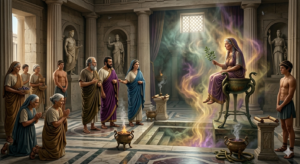
A friend visited the Oracle of Delphi, a sacred religious figure in Greece.
He asked if anyone was wiser than Socrates.
The Oracle answered:
“No one is wiser.”
When Socrates heard this, he became confused rather than proud.
He did not think of himself as wise.
9. Searching for Wisdom
Instead of celebrating, Socrates began questioning important people across Athens.
He spoke with politicians, poets, generals, and craftsmen.
At first, they sounded intelligent.
But as conversations continued, many struggled to explain their ideas clearly.
Socrates noticed something important.
People often believed they understood things they actually did not.
10. The Famous Realization
After many conversations, Socrates reached a powerful conclusion.
He realized he was wiser only because he understood his own ignorance.
That idea became one of his most famous teachings.
“I know that I know nothing.”
Even today, people still quote those words.
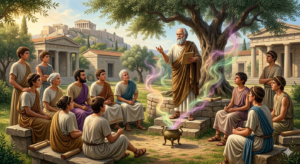
11. The Socratic Method
Socrates developed a unique style of teaching.
Instead of giving answers, he guided people through questions.
This approach is now called the Socratic Method.
It forced people to examine their beliefs carefully.
Sometimes those conversations became uncomfortable.
Very uncomfortable.
12. Conversations That Changed Minds
Imagine someone confidently saying:
“Courage means never feeling fear.”
Socrates might ask:
“If a reckless person runs into danger without understanding the risk, is that courage?”
The conversation would continue until the person realized the idea was more complicated than expected.
That was Socrates’ strength.
He made people think deeply.
13. Why Young People Loved Him
Young Athenians admired Socrates.
He treated conversations like adventures rather than lectures.
Instead of demanding blind obedience, he encouraged curiosity.
Students gathered around him constantly.
Many found his way of thinking exciting and refreshing.
14. Plato Meets Socrates
One young man became especially important.
His name was Plato.
Plato admired Socrates deeply and later recorded many of his conversations.
Without Plato, the world might know very little about Socrates today.
Their relationship changed the future of philosophy forever.
15. Another Important Student
Another follower named Xenophon also wrote about Socrates.
Through these students, his ideas survived long after his death.
Ironically, the man who never wrote books became immortal through the writings of others.
16. Not Everyone Admired Him
While many young people loved Socrates, powerful citizens often disliked him.
He embarrassed politicians publicly.
He exposed weak arguments.
He challenged traditions.
People who enjoy authority rarely appreciate being questioned constantly.
Slowly, enemies began gathering around him.
17. Athens Becomes Unstable
Athens was struggling politically during the later years of Socrates’ life.
Wars weakened the city.
Political tensions increased.
Citizens became anxious and suspicious.
During difficult times, societies often blame unusual thinkers for larger problems.
Socrates became an easy target.
18. The Accusations Against Him
Critics accused Socrates of corrupting young people.
Others claimed he disrespected traditional gods.
Some believed his constant questioning made citizens rebellious.
Rumors spread quickly across Athens.
Eventually, the city decided to put him on trial.
19. The Trial Begins
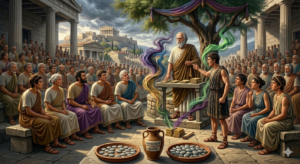
In 399 BCE, Socrates stood before a jury in Athens.
The charges were serious.
If found guilty, he could face death.
Most people in that situation would beg for forgiveness.
Socrates refused.
20. A Fearless Defense
During the trial, Socrates defended philosophy itself.
He argued that questioning people helped society grow wiser.
He compared himself to a gadfly — a tiny insect that keeps a large horse awake.
Athens, according to Socrates, needed someone to challenge comfort and arrogance.
The jury did not appreciate his bold attitude.
21. Refusing to Beg
Socrates could have tried to gain sympathy.
He could have cried before the jury or asked his family to beg for mercy.
He chose not to.
He remained calm and direct.
That honesty impressed some people but angered many others.
22. The Guilty Verdict
Eventually, the jury declared Socrates guilty.
The punishment would be decided next.
Even then, Socrates refused to act fearful.
At one point, he sarcastically suggested he deserved rewards instead of punishment for helping Athens think more clearly.
That comment likely made the jury even angrier.
23. Sentenced to Death
The final sentence was death by hemlock poisoning.
His followers were devastated.
Many could not believe Athens would execute an elderly philosopher simply for asking difficult questions.
But the decision was final.
24. A Secret Escape Plan
Some of Socrates’ friends secretly arranged a plan to help him escape prison.
They were ready to move him safely out of Athens.
Everything was prepared.
All Socrates needed to do was agree.
But he refused.
25. Why He Refused Freedom
His decision shocked everyone.
Why stay and die when escape was possible?
Socrates believed laws must be respected, even when they seem unfair.
If he escaped punishment for personal benefit, he would betray the principles he spent his life teaching.
For him, integrity mattered more than survival.
26. His Final Days
During his last days in prison, Socrates remained calm.
He spent time discussing philosophy with friends.
While others feared death, Socrates focused on conversation and reflection.
That peaceful attitude amazed the people around him.
27. Drinking the Hemlock
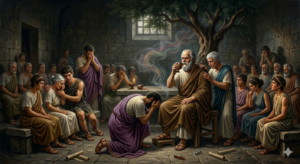
Eventually, the moment arrived.
Socrates accepted the cup of poison calmly.
His students struggled to hold back tears.
But he showed no panic.
He drank the hemlock slowly while speaking with those around him.
According to ancient accounts, numbness gradually spread through his body until he passed away peacefully.
28. Athens Creates a Legend
Athens believed it had silenced a troublesome philosopher.
Instead, it created a historical legend.
The death of Socrates became a symbol of intellectual courage.
His story spread far beyond Greece.
And his ideas survived for thousands of years.
29. Plato Preserves His Legacy
After Socrates died, Plato dedicated much of his life to preserving his teacher’s philosophy.
He wrote dialogues where Socrates appeared as the main speaker.
Those writings became some of the most influential works in Western history.
30. Aristotle Continues the Tradition
Plato later taught another brilliant student:
Aristotle.
Through Plato and Aristotle, Socrates influenced philosophy, science, politics, ethics, and education for centuries.
His impact reached far beyond ancient Greece.
31. The Power of Questions
Socrates changed the way humans think.
Before him, many teachers focused mainly on giving answers.
Socrates focused on questioning assumptions.
That simple shift transformed philosophy forever.
32. His Influence on Education
Even today, many schools and universities use forms of the Socratic Method.
Teachers encourage students to think critically rather than memorize blindly.
Law schools especially use questioning techniques inspired by Socrates.
His influence still shapes classrooms worldwide.
33. Lessons From Socrates
Socrates left behind timeless lessons.
Question Assumptions
Not every popular belief is correct.
Stay Humble
Real wisdom begins when people admit what they do not know.
Seek Truth
Truth matters more than popularity.
Think Independently
Blind obedience can be dangerous.
34. Why He Still Matters Today
Modern society still struggles with misinformation, pride, and shallow thinking.
That is why Socrates remains relevant.
He reminds people to slow down, think carefully, and question confidently stated ideas.
His teachings feel surprisingly modern even after more than 2,000 years.
Conclusion
Socrates never ruled a kingdom or commanded an army.
Yet his influence became greater than many kings and conquerors.
He walked through Athens asking difficult questions that forced people to examine themselves honestly.
Some admired him.
Others feared him.
But nobody ignored him.
And perhaps that is why his story still matters today.
Because every time someone challenges false ideas, searches for truth, or dares to think independently, the spirit of Socrates lives on.
Among Socrates’ greatest students was Plato, the philosopher who later preserved his teacher’s ideas and shaped Western philosophy for centuries. You can read more about his fascinating life and teachings in our detailed blog on Plato. Tap Here for read
For more historical details about Socrates and his philosophy, you can also explore his profile on Wikipedia. Tap Here
Frequently Asked Questions About Socrates
Who was Socrates?
Socrates was an ancient Greek philosopher from Athens who is considered one of the founders of Western philosophy.
Why was Socrates executed?
Socrates was sentenced to death by the Athenian court for allegedly corrupting the youth and disrespecting the traditional gods of Athens.
What is the Socratic Method?
The Socratic Method is a teaching technique in which questions are used to encourage critical thinking and deeper understanding.
Did Socrates write any books?
No, Socrates never wrote books. Most information about his life and teachings comes from his student Plato.
Who were the students of Socrates?
Some of the most famous students of Socrates were Plato and Xenophon.
What were the main ideas of Socrates?
Socrates focused on truth, morality, wisdom, self-examination, and the importance of questioning assumptions.
How did Socrates influence the world?
Socrates influenced philosophy, education, ethics, and critical thinking. His teachings later shaped the ideas of Aristotle and many later philosophers.
What is the most famous quote of Socrates?
One of the most famous quotes associated with Socrates is:
“The unexamined life is not worth living.”