
Introduction
Most people think history is boring until they discover how strange it actually is.
Some real historical events are so unbelievable that they sound like scenes from a movie. But once you begin digging deeper, you discover something surprising — the real world is far stranger than fiction. Some events from the past are so unbelievable that if they appeared in a movie script today, people would probably call them unrealistic.
But every story in this blog is completely real.
From emperors being attacked by rabbits to wars lasting less than an hour, history has a strange way of reminding us that humans have always lived through moments of chaos, humor, mystery, and pure coincidence. These unbelievable history facts not only entertain us, but they also reveal how unpredictable the world has always been.
In this blog, we will explore 10 historical facts that sound fake but are completely true. Some are funny, some are shocking, and others are almost impossible to believe. But every one of them is real.
And honestly, some of them are hard to believe even today.
1. The Shortest War in History Lasted Only 38 Minutes
When most people think of war, they imagine long battles that continue for months or even years. But the Anglo-Zanzibar War completely changed that idea.
The war began on August 27, 1896, after a dispute over who should become the Sultan of Zanzibar. The British Empire supported one candidate, while another prince took control of the palace without British approval. Britain gave him an ultimatum to step down. He refused.
At exactly 9:02 in the morning, British warships began firing at the palace, and within minutes the entire area turned into chaos.
The bombardment was devastating. Within less than an hour, the palace was destroyed, fires spread across the area, and the Sultan’s forces surrendered.
The war officially ended at 9:40 AM. And just like that, the shortest war in human history was over.
That means the entire conflict lasted only 38 minutes, making it the shortest recorded war in human history.
It sounds fake because wars are usually remembered for their length and destruction. But in this case, history was decided in less time than most people spend watching a television episode.

2. Napoleon Bonaparte Was Once Attacked by Rabbits
Among all shocking history facts, this one feels almost impossible to believe.
Napoleon Bonaparte was one of the greatest military commanders in history. He defeated powerful armies across Europe and built a massive empire. But surprisingly, one of his strangest defeats came from rabbits.
Napoleon expected a calm and relaxing rabbit hunt after a stressful period of war.
Instead, things became completely ridiculous.
Thousands of rabbits were collected for the event. But there was one problem — the rabbits used were domesticated rather than wild.
When they were released, instead of running away in fear, the rabbits charged directly toward Napoleon and his me
Napoleon reportedly tried to escape in his carriage while being chased by hundreds of rabbits.
The image of one of history’s most feared rulers fleeing from tiny animals sounds like comedy, but the event genuinely happened.
This strange incident reminds us that even the most powerful people in history were not immune to embarrassing moments.

3. Cleopatra Lived Closer to the Moon Landing Than the Pyramids
This is one of those historical facts that completely changes how people view ancient history.
Most people naturally imagine Cleopatra standing beside the great pyramids of Egypt during their construction. Movies and books often connect the two together.
But the truth is very different.
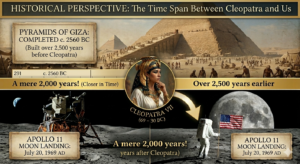
The Great Pyramid of Giza was completed around 2560 BC. Cleopatra was born around 69 BC. That means over 2,400 years separated Cleopatra from the building of the pyramids.
Meanwhile, the Moon landing happened in 1969 — only about 2,000 years after Cleopatra lived.
In other words, Cleopatra lived closer in time to astronauts landing on the Moon than to the construction of the pyramids.
It feels fake because our brains often group all “ancient” events together. But history stretches across enormous periods of time, and this fact shows just how massive human civilization truly is.
4. Vikings Reached North America Before Columbus
For generations, schools taught that Christopher Columbus discovered America in 1492. But historians now know that Europeans arrived in North America centuries earlier.
The credit likely belongs to the Vikings.
Led by Leif Erikson, Viking explorers traveled from Greenland to parts of North America around the year 1000 AD. Archaeological discoveries in Newfoundland, Canada, confirmed the existence of a Viking settlement there.
This means the Vikings reached North America nearly 500 years before Columbus.
The reason this historical fact sounds fake is because it challenges one of the most common stories taught around the world. Many people grow up hearing only one version of history, so learning that Viking explorers crossed the Atlantic long before Columbus feels shocking.
It also proves how skilled Viking sailors really were. Using only primitive ships and navigation methods, they managed to travel across dangerous oceans centuries before modern technology existed.

5. Ancient Egyptians Used Moldy Bread as Medicine
Modern antibiotics changed medicine forever. But long before scientists understood bacteria, ancient civilizations were already experimenting with natural treatments.
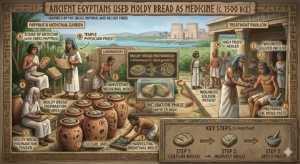
The ancient Egyptians sometimes placed moldy bread on infected wounds to help healing.
At first, this sounds disgusting rather than scientific. But modern researchers discovered that certain types of mold naturally produce antibiotic substances capable of fighting bacteria.
Without understanding microbiology, the Egyptians unknowingly discovered a primitive form of infection treatment thousands of years before penicillin was officially discovered.
This unbelievable history fact shows that ancient societies were often more advanced than we imagine. Many early civilizations developed medical techniques through observation and experimentation long before modern science explained why they worked.
6. A Man Survived Both Atomic Bombings in Japan
Few events in human history were more devastating than the Atomic bombings of Hiroshima and Nagasaki during World War II.
But one man experienced both attacks and survived.
Tsutomu Yamaguchi was working in Hiroshima when the first atomic bomb exploded on August 6, 1945. He survived the blast and returned home to Nagasaki.
Three days later, another atomic bomb exploded there as well.
Against all odds, Yamaguchi survived both bombings and lived for many more decades.
It sounds fake because surviving even one atomic explosion seems nearly impossible. Surviving two feels beyond belief.
His story became a symbol of human endurance and survival during one of history’s darkest periods.

7. There Was a Real War Fought Over a Bucket
Some wars begin because of politics, religion, or territory. But the War of the Bucket sounds like something invented for a comedy movie.
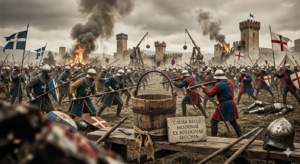
According to legend, soldiers from the Italian city of Modena stole a wooden bucket from Bologna. The theft became part of growing tensions between the rival cities.
Eventually, conflict exploded into open war.
Thousands of soldiers became involved in battles connected to what became known as the War of the Bucket. The stolen bucket itself reportedly remains preserved in Italy even today.
While deeper political issues were certainly involved, the bucket became the famous symbol of the conflict.
This strange historical fact reminds us that human pride and rivalry have always played major roles in history — sometimes in very ridiculous ways.
8. People Once Believed Tomatoes Were Poisonous
Today tomatoes are used in pizzas, salads, pasta, and countless dishes worldwide. But in parts of Europe, people once feared them.
Many believed tomatoes were deadly poisonous.
The fear mainly affected wealthy Europeans who ate from expensive pewter plates containing high levels of lead. Tomatoes are naturally acidic, and when placed on those plates, they absorbed dangerous amounts of lead.
People became sick after eating tomatoes and blamed the fruit itself instead of the plates.
As a result, tomatoes developed a frightening reputation for many years.
This historical fact sounds fake because tomatoes are now considered one of the most common foods on Earth. Imagining people treating them like poison feels almost impossible.
But it also shows how misunderstandings and limited scientific knowledge shaped everyday life in the past.

9. The Ottoman Empire Lasted Longer Than Many Modern Countries
The Ottoman Empire was one of the most powerful empires in world history.
Founded around 1299, it survived until 1922.
That means the empire lasted for more than 600 years.
To understand how incredible this is, consider that many modern countries today have existed for far shorter periods. Entire generations were born, lived, and died under Ottoman rule for centuries.
The empire witnessed enormous historical changes:
- the rise and fall of kingdoms
- the discovery of the Americas
- the Industrial Revolution
- World War I
Despite all these transformations, the Ottoman Empire continued to survive for hundreds of years.
It feels unbelievable because most empires collapse relatively quickly. But the Ottomans adapted constantly, helping them remain powerful across different historical eras.

10. The Great Fire of London Killed Surprisingly Few People
The Great Fire of London destroyed homes, churches, and huge sections of London in 1666.
The disaster lasted several days and turned much of the city into ashes.
Because the destruction was so massive, most people assume thousands died.
But official historical records report surprisingly few deaths.
Historians still debate the exact numbers because poor citizens may not have been properly counted. However, compared to the scale of destruction, the death toll remained unexpectedly low.
The fire eventually led to major improvements in urban planning and building design. London was rebuilt using safer materials, helping prevent similar disasters in the future.
This strange history fact reminds us that destruction does not always lead to the outcomes people expect.

Why These Historical Facts Fascinate Us
People love unbelievable history facts because they make the past feel alive. Instead of viewing history as boring dates and names, we suddenly see real human emotions — fear, mistakes, pride, humor, survival, and curiosity.
These stories also remind us that reality is often stranger than fiction.
The past was not filled only with kings and battles. It was also filled with bizarre accidents, unexpected events, and moments so strange they sound invented.
That is what makes history endlessly fascinating.
Conclusion
The world’s history is far more surprising than most people realize. From rabbit attacks on emperors to wars fought over buckets, these strange events prove that human civilization has always been unpredictable.
And perhaps that is why history never becomes boring.
Every generation leaves behind stories that future generations can barely believe. Some are inspiring, some are tragic, and others are simply strange. But together, they create the incredible story of humanity itself.
The next time someone says history is boring, just remind them that somewhere in the past, an emperor was running away from rabbits while another man survived two atomic bombings.
Reality has always been stranger than fiction.