
Introduction
Today, it is almost impossible to imagine life without electricity. From mobile phones and streetlights to transportation and communication, modern cities depend on power every second. A single power cut can stop traffic, businesses, hospitals, and even daily routines. But thousands of years ago, great civilizations built massive cities and successful societies without using electricity at all.
This raises an interesting question: how did ancient cities survive and function so efficiently without modern technology?
The answer lies in human creativity, intelligent planning, and a deep understanding of nature. Ancient civilizations developed systems that allowed people to live comfortably, trade goods, manage water, and build communities long before electric wires and machines existed.
Cities such as Mohenjo-daro, ancient Rome, and Egyptian settlements proved that human civilization was highly advanced even in ancient times.
Water: The Heart of Ancient Cities
No city can survive without water. Ancient people understood this very well.
Since electric pumps did not exist, civilizations built cities near rivers, lakes, or underground water sources. Water was collected through wells, canals, reservoirs, and rainwater harvesting systems.
One of the greatest examples comes from the Indus Valley Civilization. Archaeologists discovered that cities like Mohenjo-daro had advanced drainage and water systems thousands of years ago. Houses were connected to covered drains, and public wells supplied clean water to residents.
In ancient Rome, engineers built huge aqueducts that transported water across long distances using only gravity. These structures carried water into cities without electricity or machines.
Even today, many experts admire the engineering skills of these ancient civilizations.
Keeping Cities Cool Without Air Conditioners
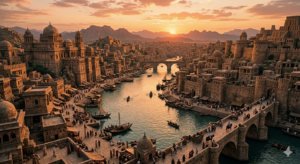
Modern cities depend heavily on fans and air conditioners, especially during summer. Ancient people, however, used architecture itself to control temperature.
Buildings were designed according to climate conditions. Thick walls made from stone or clay helped block heat during the daytime. Open courtyards allowed air to circulate naturally through homes.
Narrow streets created shade while high ceilings improved ventilation.
In desert regions, builders carefully positioned windows and doors to capture cool winds. These techniques kept homes surprisingly comfortable without using electricity.
Interestingly, many modern architects are once again studying ancient cooling methods because they are environmentally friendly and sustainable.
Lighting Before Electricity
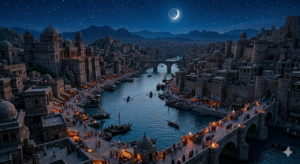
When the sun disappeared, ancient cities relied on fire-based lighting.
People used:
- Oil lamps
- Candles
- Torches
- Clay lamps
- Fire pits
Wealthier families often owned decorative lamps made from bronze or pottery. Public areas such as markets and gathering spaces sometimes remained active after sunset using torchlight.
Although these lighting methods were much dimmer than modern electric bulbs, they allowed communities to continue social activities during the night.
Darkness also changed the rhythm of life. Most people slept earlier because nighttime activities were limited compared to modern society.
Transportation in Ancient Times
Without cars, trains, or airplanes, transportation depended on animals and human strength.
Ancient cities used:
- Horses
- Bullock carts
- Camels
- Boats
- Chariots
Roads played a major role in trade and communication. The Roman Empire became famous for its strong road networks that connected distant territories.
Rivers were also extremely important because transporting goods by water was easier than carrying them across land.
Trade routes connected civilizations and allowed the exchange of:
- Spices
- Metals
- Cloth
- Food
- Jewelry
Even without engines or fuel, ancient trade systems supported powerful economies.
Communication Without Phones or Internet
Today, people can communicate instantly across the world. Ancient civilizations had no phones, internet, or social media, but they still developed effective communication systems.
Kings and rulers used messengers who traveled long distances on foot or horseback carrying official information.
Important announcements were made publicly in marketplaces and gathering areas.
Some civilizations used:
- Drums
- Smoke signals
- Written letters
- Symbols
- Town criers
Messages traveled slowly compared to modern standards, but organized communication systems still helped manage kingdoms and cities successfully.
Markets and Economic Activity
Ancient cities were full of economic life.
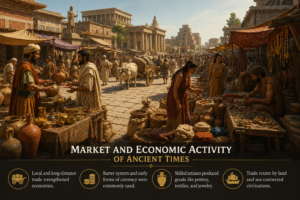
Busy marketplaces sold:
- Grain
- Pottery
- Clothing
- Jewelry
- Spices
- Tools
Skilled craftsmen created products using hand tools and traditional methods. Merchants traveled across regions to trade valuable goods.
Markets also became social centers where people gathered, exchanged news, and built relationships.
Despite lacking modern technology, ancient economies were surprisingly organized and active.
Public Hygiene and Drainage Systems
One of the most impressive achievements of ancient urban planning was sanitation.
Cities like Mohenjo-daro had planned drainage systems connected to homes and streets. Wastewater was directed away from residential areas through covered drains.
Public baths and water tanks also existed in several ancient cities.
These discoveries shocked historians because they showed that people thousands of years ago already understood the importance of cleanliness and public hygiene.
Some ancient drainage systems were even more organized than those found in certain medieval cities many centuries later.
Safety and Protection
Ancient cities faced threats from invaders, wild animals, and natural disasters. To survive, civilizations built strong defensive structures.
Cities were protected by:
- Fortified walls
- Watchtowers
- Gates
- Guards
- Military camps
Many settlements were built near rivers, hills, or deserts because natural geography provided additional security.
At night, guards monitored city entrances and protected marketplaces and important buildings.
Religion and Community Life
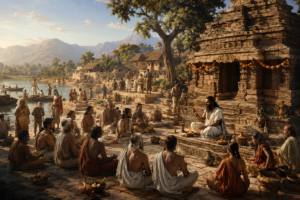
Religion played an important role in ancient societies. Temples, shrines, pyramids, and gathering halls became the center of community life.
Festivals and ceremonies brought people together and strengthened social bonds.
Without television or digital entertainment, communities spent more time interacting face-to-face. Storytelling, music, and cultural traditions became important parts of everyday life.
Ancient cities were not only centers of trade and politics but also centers of culture and human connection.
What Ancient Cities Teach Us Today
Modern society often assumes that advanced living requires advanced technology. But ancient civilizations proved that intelligent planning and cooperation can create successful societies even without electricity.
Their methods were:
- Sustainable
- Environmentally friendly
- Community-oriented
- Adapted to nature
Today, many urban planners study ancient cities for inspiration in solving modern environmental and infrastructure problems.
Ancient architecture, water management systems, and climate-friendly designs continue influencing modern construction around the world.
Conclusion
The survival and success of ancient cities without electricity remains one of humanity’s greatest achievements.
Civilizations such as Mohenjo-daro demonstrate how intelligence, engineering, and creativity allowed societies to flourish thousands of years ago.
Without modern machines, people still built organized cities, managed water systems, created trade networks, and developed powerful cultures.
Their story reminds us that human progress is not defined only by technology but also by innovation, adaptability, and understanding the world around us.
Even in today’s modern age, ancient cities continue teaching lessons that remain surprisingly relevant for the future.