
Introduction: In 1989, the world witnessed one of the most powerful moments in modern history-the fall of the Berlin wall fall. For nearly three decades, this wall stood as a symbol of division, separating families, ideologies , and nation. But in one historic night, everything changed. The collapse of the wall not only reunited Germany but also marked the beginning of the end of the cold war.
“This event always fascinated me because
it proves that unity and courage can break even the strongest barriers.”
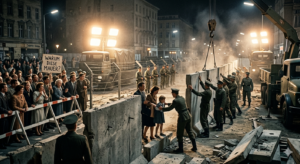
1.Why the Berlin Wall Was Built
After World War ||, Germany was divided into two part_ East Germany and West Germany. While West Germany followed democratic values, East Germany came under communist control supported by the soviet Union.
To stop people from escaping to the West, East Germany built the Berlin Wall in 1961. It wasn’t just a physical barrier, it became a powerful symbol of the cold war , representing the clash between two opposing ideologies_ capitalism and communism.
Families were separated overnight, and freedom became a distant dream for many living in the East.
2. Life Before the fall
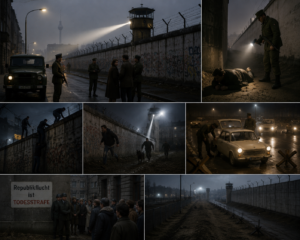
Life in East Berlin was difficult and heavily controlled. People had limited freedom of speech, strict government surveillance,and almost no opportunity to travel freely.
Many tried to escape, risking their lives. Some succeeded but, many were caught or even killed while attempting to cross the wall. The
fear and tension were constant, making the Berlin Wall one of the most dangerous borders in the world.
3. The Night Everything Changed (1989)
By the late 1980s, pressure was building in East Germany. People were protesting for freedom, inspired by changes happening across Eastern Europe.
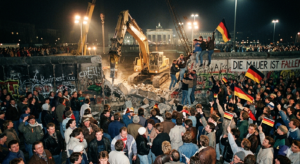
On November 9, 1989, a government official mistakenly announced that citizens could cross the border freely. Within hours, thousands of people gathered at the wall.
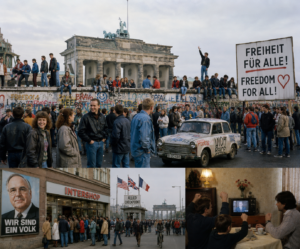
Border guards, unprepared and overwhelmed, eventually allowed people to pass. Crowds began celebrating, climbing the wall, and even breaking it apart. It was a moment of pure joy, unity, and freedom.
The fall of the Berlin Wall fall became a global symbol of hope.
4. After the fall
After the wall fell, Germany was reunited in 1990. This marked the end of division between East and West Germany. It also led to major changes in Europe, including the decline of communist control.
“This event not only change Germany but it can also the future of many countries.”
5. Life on Both Sides
Life became very different on each side of the wall. In East Germany, people had limited freedom, and the government controlled many aspects of life. In contrast, West Germany offered more freedom, better jobs, and a higher standard of living.
Families were separated, and many people could not meet their loved ones for years. Some tried to escape, but it was very risky.
“It must have been very painful for families to live apart like this where they get limited freedom and wasn’t confined there voice against the superiors.
6. Political Tension in Europe
After World War II, Europe was divided into two major groups. Western countries supported democracy, while Eastern countries followed communism under the influence of the Soviet Union. This division created tension between powerful nations. Germany became the center of this conflict, and Berlin turned into a symbol of this growing political struggle. The situation increased fear and competition between the two sides.
7.Role of Leaders and Governments
Leaders played an important role in bringing change. One of the key figures was Mikhail Gorbachev, who introduced reforms in the Soviet Union. His policies encouraged openness and reduced strict control over Eastern European countries. Because of this, governments in places like East Germany started losing their strong hold. These changes gave people the courage to demand more freedom and rights.
8.Global Reaction and Long-Term Impact
The fall of the Berlin Wall was not only important for Germany but also had a strong impact around the world. When the news spread, people in many countries celebrated this historic moment. It was seen as a victory for freedom and human rights. Leaders from different nations welcomed this change and supported the idea of a united Germany.
Many countries in Eastern Europe were inspired by this event. Nations like Poland, Hungary, and Czechoslovakia started making changes in their political systems. People in these countries also demanded more freedom and democratic rights. Slowly, communist governments in many parts of Europe began to weaken and collapse. This showed that the fall of the Berlin Wall was not just a local event—it was part of a much bigger global transformation.
Another important effect was the decline of the Cold War. For many years, the world was divided into two groups led by the United States and the Soviet Union. The fall of the wall reduced tension between these superpowers. It created a path for better communication and cooperation. Within a few years, the Cold War came to an end, bringing a more peaceful global environment.
The economic impact was also very significant. After reunification, Germany worked hard to improve the condition of former East Germany. New industries, better infrastructure, and more job opportunities were developed. Although it took time, the country slowly reduced the gap between the two regions. Today, Germany stands as one of the strongest economies in the world.
Socially, the fall of the wall helped reconnect people. Families and friends who were separated for years could finally meet freely. This brought happiness and emotional relief to millions of people. Cultural exchange also increased, as people from both sides started sharing ideas, traditions, and experiences.
The fall of the Berlin Wall also left behind an important message for future generations. It proved that peaceful protests and unity can bring major changes. People realized that even strong systems of control can be challenged when citizens stand together.
“This event shows that change is always possible. It also teaches us to value freedom unity in our lives because unity is that which have that much of power that they could solve any problem arise on large scale.”
9. Lesson from the berlin wall
The story of the Berlin Wall teaches us important lessons:
. No division can last forever
. People desire for freedom is stronger that fear
. Unity can overcome even the strongest barriers
It reminds us that history is shaped not just by government, but by ordinary people who demand change.
Conclusion: The fall of the Berlin Wall was a moment filled with hope, emotion, and new beginnings. Families reunited, people celebrated freedom, and a divided nation became one again. This event shows that unity and determination can overcome any obstacle. It teaches us that freedom is one of the most valuable things in life and should always be protected.
*There is great blog of King Louis then Visit to
- Great Germany History as per Wikipedia.