
Introduction
On the night of 25 June 1975, All India Radio carried a brief, chilling announcement in Prime Minister Indira Gandhi’s voice: a state of internal emergency had been declared. By the time most Indians woke up the next morning, the country they knew had changed. Newspapers had gone silent or were printing blank spaces where editorials should have been. Opposition leaders were missing from their homes. The Constitution itself had been bent to concentrate power in the hands of one office.
The Emergency lasted from 25 June 1975 to 21 March 1977 — twenty-one months that remain among the most debated, dissected, and divisive chapters in independent India’s history. It is considered controversial not simply because civil liberties were suspended, but because it forced the country to confront a question it had never seriously had to ask before: could the same democratic machinery that had been built to protect freedom be turned, almost overnight, into an instrument that suppressed it?
This blog traces the Emergency from its roots in the turbulent politics of the early 1970s to its dramatic end at the ballot box in 1977, examining what happened, why it happened, and what it still means for Indian democracy today.
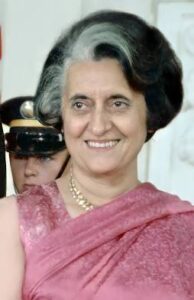
Political Background Before the Emergency
To understand why the Emergency happened, one has to look at the India of the early 1970s — a country under enormous strain.
The economy was in poor shape. The 1971 war with Pakistan, which led to the creation of Bangladesh, had drained the exchequer. Two consecutive years of poor monsoons hurt agricultural output. Then came the 1973 global oil shock, which sent prices of fuel and, in turn, virtually everything else, spiralling upward. Inflation touched double digits, eroding the value of wages just as unemployment was rising among a young, increasingly restless population. For ordinary citizens, daily life had become a struggle against shortages — of food grains, of jobs, of basic affordability.
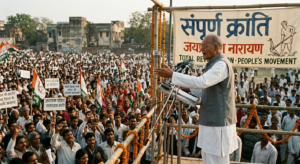
This economic distress found its political expression in two states in particular. In Gujarat, a student protest against rising hostel fees in December 1973 snowballed into the Nav Nirman Andolan, a broader movement against corruption and price rise that eventually forced the resignation of the state’s Chief Minister. In Bihar, a similar wave of student unrest in 1974 evolved into a movement demanding the dissolution of the state assembly.
It was this Bihar movement that drew in Jayaprakash Narayan — “JP” to most Indians — a veteran socialist leader and freedom fighter who had largely stayed away from active politics for years. JP lent his moral authority and organisational skill to the student agitation, transforming it into a nationwide call against the Congress government, corruption, and what he described as the erosion of democratic accountability. His movement gave the scattered opposition — socialists, Hindu nationalists, regional parties, and disaffected Congressmen alike — a common platform and a charismatic figurehead.
By 1975, opposition to Indira Gandhi’s government had hardened from scattered discontent into an organised, energetic, and increasingly confident political force. It was against this backdrop that a court verdict in Allahabad would light the fuse.
The Allahabad High Court Verdict (1975)
The immediate trigger for the Emergency was a courtroom, not the streets.
Raj Narain, a socialist leader who had contested and lost the 1971 Lok Sabha election from the Rae Bareli constituency against Indira Gandhi, had filed an election petition alleging that she had used government machinery and officials for her campaign — a violation of election law.
On 12 June 1975, Justice Jagmohanlal Sinha of the Allahabad High Court delivered his verdict. He found Indira Gandhi guilty of corrupt electoral practices, specifically relating to the misuse of government officials during her campaign, and declared her election void. She was also barred from contesting elections for six years.
The judgment did not end her position as Prime Minister immediately — she was granted a conditional stay that allowed her to continue in office pending an appeal to the Supreme Court — but it was a political earthquake. For the first time, a sitting Prime Minister had been found guilty of electoral malpractice by a court of law. The opposition smelled blood and intensified its demand for her resignation. JP and other leaders began planning a massive rally in Delhi to press the point. The pressure on Indira Gandhi’s government, already considerable, became acute.
Declaration of Emergency
Late on the night of 25 June 1975, acting on the advice of Prime Minister Indira Gandhi, President Fakhruddin Ali Ahmed signed a proclamation invoking Article 352 of the Constitution, which permits the declaration of a state of emergency in the event of war, external aggression, or “internal disturbance.”
This was the critical and most contested phrase: internal disturbance. India was not at war. There was no invasion. The justification offered was that the country’s internal security was threatened by escalating political agitation. Critics would later argue, including the Shah Commission appointed after the Emergency ended, that the proclamation was sought and signed in a manner that bypassed the Cabinet’s collective deliberation — the Cabinet was informed of the decision the next morning, after the fact, rather than consulted beforehand.
With the President’s signature, India formally entered a period in which the normal constitutional order — checks on executive power, judicial recourse, and a free press — was suspended in the name of restoring order.
Suspension of Civil Liberties
The consequences for ordinary citizens were immediate and severe. Fundamental Rights guaranteed under the Constitution, including the right to life and personal liberty under Article 21, were curtailed. Under the Maintenance of Internal Security Act (MISA), the government could detain individuals without trial and without having to disclose the grounds for arrest.
Most significantly, the right of citizens to move courts to challenge their detention — the writ of habeas corpus — was suspended. This meant that a person could be arrested and held indefinitely, with no legal avenue to question why. The Supreme Court itself, in the now-infamous ADM Jabalpur case of 1976, controversially upheld the government’s right to suspend this protection even during an Emergency — a verdict the Court itself would later disown as one of its darkest moments.
For a country that had taken pride in its democratic Constitution since 1950, this was an unprecedented hollowing-out of the basic guarantees citizens believed were inviolable.
Press Censorship
A free press is often called democracy’s watchdog. During the Emergency, that watchdog was muzzled.
Newspapers were required to submit content for pre-censorship before publication; nothing critical of the government, its policies, or its leadership could appear without official clearance. Power supply to certain newspaper offices was even cut off in the early hours after the declaration, ensuring that critical editorials could not go to print before censorship rules took effect. Several prominent publications faced direct restrictions, advertising boycotts, or had their journalists arrested.
The mood of the press in those months was famously summed up by L.K. Advani, who later remarked that when the press was merely asked to bend, large sections of it chose to crawl — a line that has stuck in public memory as a verdict on how thoroughly institutional resistance collapsed once real pressure was applied. Some publications and editors did resist, printing blank editorial columns or risking shutdowns rather than self-censor completely, but they were the exception rather than the rule.
Mass Arrests of Opposition Leaders
Within hours of the Emergency’s declaration, a coordinated crackdown began. Jayaprakash Narayan, the moral force behind the anti-Congress movement, was arrested. So were Morarji Desai, a senior Congress veteran turned opposition leader, and younger leaders from the Rashtriya Swayamsevak Sangh-aligned Jana Sangh — Atal Bihari Vajpayee and Lal Krishna Advani among them.
The arrests were not confined to top leadership. Estimates suggest well over a hundred thousand people — student activists, trade unionists, journalists, and ordinary political workers — were detained under preventive detention laws over the course of the Emergency, often without formal charges. For many families, the experience of having a relative simply disappear into custody, with no court to appeal to, became the most personally felt consequence of this period.
Role of Sanjay Gandhi
Although he held no formal government position, Sanjay Gandhi, Indira Gandhi’s younger son, emerged as one of the most powerful — and most feared — figures of the Emergency years.
He championed what came to be known as the Five-Point Programme, an agenda that included promoting family planning, tree plantation, abolition of dowry, adult literacy, and ending the caste system. In practice, it became closely associated with aggressive urban development and slum-clearance drives, and most infamously, an intensified family planning campaign that took on a coercive character in many states.
Sanjay Gandhi’s informal but unchecked authority — operating outside any constitutional office yet able to direct bureaucrats and influence policy — became, for critics, a symbol of how the Emergency had personalised power beyond even the Prime Minister’s own office.
Forced Sterilization Campaign
Among the most painful legacies of the Emergency was the family planning programme that Sanjay Gandhi pushed with particular zeal. India’s population growth had long worried policymakers, and family planning had been part of government policy for years. What changed during the Emergency was the method.
State governments, eager to meet sterilization targets set from the top, often resorted to coercion: withholding rations, salaries, or other benefits from people unless they agreed to sterilization, and in many documented cases, performing the procedure without genuine consent. Numbers ran into the millions, performed often in unsanitary conditions with inadequate medical oversight, leading to a number of deaths from botched procedures.
When details of the campaign’s coercive nature became widely known after the Emergency was lifted, the public reaction was one of anger and betrayal. The forced sterilization campaign is frequently cited as the single most damaging policy of the period in terms of how it turned ordinary rural and poor communities — many of whom were not naturally aligned with the urban opposition — decisively against the government.
Slum Clearance Drives
Parallel to the sterilization drive ran an aggressive urban “beautification” campaign, again closely associated with Sanjay Gandhi’s influence over Delhi’s administration. Slums and unauthorised settlements, many of which had existed for years, were demolished with little notice and minimal resettlement planning.
The most notorious instance was the demolition near the Turkman Gate area in Old Delhi in 1976. Residents resisting eviction reportedly faced police firing, and the demolitions displaced thousands of poor, largely Muslim families from a neighbourhood that had stood for generations. The episode came to symbolise the human cost of development imposed without consent, and remains one of the most criticised single incidents of the entire Emergency period.
Constitutional Changes During Emergency
The Emergency was not just an administrative clampdown; it was also used to permanently alter the constitutional architecture of the country.
The 38th Amendment placed the President’s power to declare an Emergency beyond judicial review. The 39th Amendment placed the election of the Prime Minister and certain other high offices beyond the scrutiny of courts — a direct response to the Allahabad High Court case that had started the chain of events. Most far-reaching was the 42nd Amendment, passed in 1976 and often called the “Mini Constitution” for the sheer scale of changes it introduced. It curtailed the power of courts to review constitutional amendments, extended the terms of the Lok Sabha and state assemblies, and significantly enlarged the powers of the central government relative to the states and the judiciary.
Many of these provisions were later diluted or reversed after the Emergency ended, particularly through the 44th Amendment in 1978, but their passage demonstrated how quickly the balance of power among India’s institutions could be reshaped when one branch of government accumulated overwhelming authority.
Public Reaction
Public opinion on the Emergency, even at the time, was not uniform.
Supporters pointed to visible, tangible changes: government offices reportedly became more disciplined, with employees arriving on time; trains famously began running closer to schedule; strikes and industrial unrest, which had plagued the early 1970s, fell sharply; and some price stabilisation was achieved in the short term. For a population exhausted by years of agitation, shortages, and disorder, these were not trivial gains, and a section of the middle class quietly welcomed the apparent return of order.
Critics, however, argued that these gains came at a price no democracy should be asked to pay: arbitrary arrests, a press unable to report freely, courts stripped of their power to protect citizens, and policies imposed coercively on the poor and powerless without any avenue for redress. For them, the Emergency represented authoritarian rule dressed up as administrative efficiency — a trade of liberty for order that history would ultimately judge harshly.
End of the Emergency
By late 1976, perhaps believing her own government’s narrative of restored stability, and reportedly receiving optimistic — if inaccurate — assessments of her popularity, Indira Gandhi called for fresh general elections.
In January 1977, the election was announced, and political prisoners, including JP, Morarji Desai, Vajpayee, and Advani, were released. On 21 March 1977, the Emergency was formally withdrawn, even before the election results were known, signalling at least a partial return to normal constitutional functioning ahead of the vote.
The 1977 General Election
The 1977 election became, in effect, a referendum on the Emergency itself. The major opposition parties — including the Congress (O), Jana Sangh, Bharatiya Lok Dal, and the Socialist Party — merged to form the Janata Party, presenting a united front against Indira Gandhi’s Congress for the first time.
The results were a stunning reversal of two decades of Congress dominance. Indira Gandhi lost her own seat in Rae Bareli. The Congress party was routed, particularly across northern India. Morarji Desai became Prime Minister, leading the first non-Congress government to hold power at the Centre since independence — a landmark moment that proved, decisively, that the electorate had not forgotten what had been taken from it during those twenty-one months.
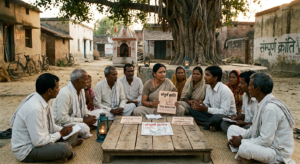
Legacy and Historical Significance
The Emergency remains one of the most studied episodes in Indian political history, not because its lessons are settled, but because they continue to be argued over.
For Indian democracy, it offered a sobering demonstration of how fragile constitutional safeguards can be when concentrated in too few hands, and it directly shaped subsequent efforts to strengthen judicial independence, protect press freedom, and build in stronger checks against the misuse of emergency powers — many of which were addressed through the 44th Amendment.
Historians and political commentators continue to debate it because it resists a simple verdict. Was it a necessary, if harsh, response to genuine disorder, or a calculated capture of constitutional machinery for personal and political survival? Did the administrative discipline it briefly produced justify the human cost borne by the poor, the dissenting, and the powerless? These questions remain unresolved, which is precisely why the Emergency continues to feature so prominently in conversations about the strength — and the vulnerability — of Indian democracy.
What is not in dispute is its lasting imprint on modern Indian politics: it normalised the idea that political opposition could coalesce rapidly into anti-incumbent coalitions, gave rise to a generation of leaders (several of whom went on to lead the country themselves) forged in the experience of imprisonment and resistance, and left behind a wary public memory that has, ever since, treated any talk of curtailing civil liberties with deep suspicion.
Important Article As Per History Decoded Hub
1. The Untold Story of the Mughal Empire
Throughout Indian history, periods of centralized authority have shaped the nation, as seen in The Untold Story of the Mughal Empire.
2. The East India Company: How a Trading Company Conquered India
The Emergency marked a significant moment in India’s democratic journey, centuries after the political transformations brought by The East India Company.
3. The Falklands War: A Conflict That Shocked the World
The 1970s witnessed several major global events, including the Falklands War, which reshaped international politics.
4. Humayun: The Rise, Fall, and Return of the Second Mughal Emperor
Anchor Text:
Like Humayun’s turbulent reign, the Emergency remains one of the most debated periods in Indian history.
External link suggestion
1. Encyclopaedia Britannica – The Emergency (India)
Link:
https://www.britannica.com/topic/emergency-India-1975-1977