
Introduction
History is filled with wars, empires, and powerful rulers, but few events changed the course of the modern world as dramatically as the French Revolution. What began in 1789 as a protest against unfair taxes and rising food prices soon grew into a movement that destroyed a centuries-old monarchy, challenged traditional authority, and introduced ideas that continue to shape societies today.
At first glance, France seemed powerful. It was one of Europe’s largest and wealthiest kingdoms. The royal court at Versailles symbolized luxury and prestige. Yet beneath this glittering surface, deep cracks had begun to form.
The poor struggled to survive, the middle class demanded political influence, and the monarchy failed to recognize how dangerous the growing dissatisfaction had become. By the time the revolution erupted, France was a kingdom standing on the edge of collapse.
The story of the French Revolution is not just about kings and politicians. It is a story of ordinary people, radical ideas, hope, fear, violence, and transformation. It shows how a powerful kingdom ultimately destroyed itself and, in doing so, changed the world forever.
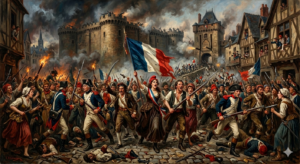
A Kingdom Divided by Privilege
Before the revolution, French society was divided into three groups known as Estates.
The First Estate
The First Estate consisted of the clergy. Church officials enjoyed significant privileges, owned large amounts of land, and paid few taxes.
The Second Estate
The Second Estate was made up of nobles. They held important government and military positions while enjoying special legal and financial advantages.
The Third Estate
The Third Estate included everyone else—peasants, workers, merchants, lawyers, doctors, and craftsmen.
Although the Third Estate represented nearly 98 percent of the population, it carried the heaviest tax burden.
This system created enormous resentment. While wealthy nobles lived comfortably, many ordinary citizens struggled to afford basic necessities. The inequality was impossible to ignore, and over time it became one of the major causes of the French Revolution.
The Financial Crisis That Brought France to the Brink
Social inequality alone did not cause the revolution.
France also faced a severe financial crisis.
Years of expensive wars had drained the treasury. The government had spent heavily supporting the American colonies during their fight for independence against Britain.
At the same time, the royal court continued to spend lavishly.
King Louis XVI inherited a kingdom drowning in debt. Attempts to reform the tax system failed because privileged groups refused to sacrifice their advantages.
Meanwhile, poor harvests led to food shortages.
Bread prices rose dramatically.
For many families, bread was not just food—it was survival.
As hunger spread across the country, public anger intensified. People increasingly viewed the monarchy as disconnected from their daily struggles.
How Enlightenment Ideas Inspired the French Revolution
Economic hardship created frustration, but ideas turned frustration into revolution.
Throughout the eighteenth century, Enlightenment thinkers challenged traditional authority.
Philosophers such as Voltaire, Jean-Jacques Rousseau, and Montesquieu argued that governments should serve the people rather than rule without accountability.
They promoted concepts such as:
- Liberty
- Equality
- Individual rights
- Popular sovereignty
- Freedom of expression
These ideas spread among educated citizens and members of the growing middle class.
People began asking difficult questions.
Why should a king possess absolute power?
Why should nobles enjoy privileges they had not earned?
Why should ordinary citizens have no voice in government?
The French Revolution would eventually be fought in the streets, but it was first born in the minds of thinkers and reformers.
The Estates-General and the Beginning of Revolution
Facing financial disaster, King Louis XVI called a meeting of the Estates-General in 1789.
This assembly had not met for more than 170 years.
Instead of solving the crisis, the meeting exposed deep divisions within French society.
Representatives of the Third Estate demanded greater political representation. When their demands were ignored, they declared themselves the National Assembly and pledged to create a constitution for France.
This moment marked a direct challenge to royal authority.
The old political order had begun to crumble.
The Storming of the Bastille
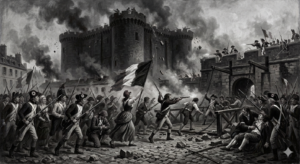
On July 14, 1789, Paris exploded with tension.
Fearing that the king would use military force against reformers, thousands of citizens marched toward the Bastille.
The fortress prison held only a few prisoners, but it symbolized royal oppression.
After hours of fighting, the crowd captured the Bastille.
The event quickly became the most famous symbol of the French Revolution.
For the first time, ordinary citizens had openly challenged the authority of the monarchy and won.
News of the victory spread throughout France, inspiring revolutionary movements across the country.
The Declaration of the Rights of Man and of the Citizen
One of the most important achievements of the French Revolution came in August 1789.
The National Assembly adopted the Declaration of the Rights of Man and of the Citizen.
This document declared that:
- All men are born free and equal.
- Citizens possess natural rights.
- Government authority comes from the people.
- Freedom of speech and expression should be protected.
The declaration became one of the foundations of modern democracy.
Its influence can still be seen in constitutions and human rights documents around the world today.
The Women’s March on Versailles
The revolution was not led only by politicians and intellectuals.
Ordinary women played a crucial role.
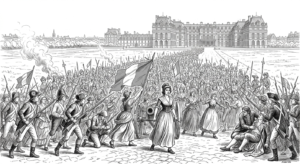
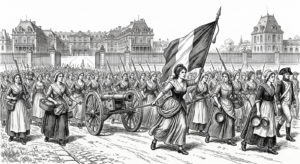
In October 1789, thousands of women marched from Paris to Versailles.
They were angry about food shortages and rising bread prices.
The march quickly became one of the most dramatic events of the revolution.
The women demanded action from the king and forced the royal family to relocate to Paris.
This move placed the monarchy under the watchful eyes of the people.
The Women’s March demonstrated that ordinary citizens could directly influence political events.
Who Were the Sans-Culottes?
As the revolution progressed, a powerful group emerged known as the Sans-Culottes.
They were mostly working-class citizens of Paris.
Unlike wealthy nobles, they wore simple trousers rather than fashionable knee-breeches.
The Sans-Culottes became some of the revolution’s most passionate supporters.
They demanded:
- Lower food prices
- Political equality
- Strong action against enemies of the revolution
Their influence pushed the revolution toward increasingly radical measures.
Without the Sans-Culottes, the French Revolution might have followed a very different path.
The Fall of the Monarchy
The relationship between King Louis XVI and the revolutionaries continued to deteriorate.
In 1791, the king attempted to flee France.
Although he was captured before reaching safety, the damage was done.
Many citizens viewed the attempted escape as betrayal.
Trust in the monarchy collapsed.
In 1792, revolutionaries officially abolished the monarchy and declared France a republic.
A new era had begun.
The Trial and Execution of Louis XVI
The king’s fate soon became one of the most controversial questions facing revolutionary leaders.
After a lengthy debate, Louis XVI was put on trial for treason.
He was found guilty.
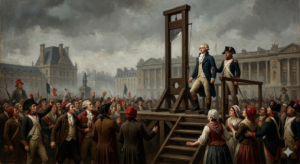
In January 1793, he was executed by guillotine.
Months later, his wife, Marie Antoinette, was also executed.
For centuries, French kings had ruled with immense authority.
Now the monarchy had come to a dramatic and irreversible end.
The French Revolution and Religion
Religion became another major source of conflict.
Before 1789, the Catholic Church held enormous influence in French society.
Revolutionaries believed the Church possessed too much wealth and power.
Church lands were confiscated.
Religious institutions were reorganized.
Clergy were required to swear loyalty to the state.
Many people supported these changes, but others saw them as attacks on their faith.
The conflict deepened divisions throughout the country and contributed to resistance against the revolution in several regions.
Why the Reign of Terror Happened
One of the darkest chapters of the French Revolution was the Reign of Terror.
To understand why it occurred, it is important to understand the fears facing revolutionary leaders.
France was threatened by:
- Foreign armies
- Internal rebellions
- Political conspiracies
- Economic instability
Many revolutionaries believed the republic could collapse at any moment.
Fear created an atmosphere of suspicion.
Leaders argued that harsh measures were necessary to protect the revolution.
This belief paved the way for the Terror.
The Reign of Terror
Between 1793 and 1794, thousands of people were arrested and executed.
Many were accused of being enemies of the revolution.
The guillotine became the symbol of this period.
One of its most influential leaders was Maximilien Robespierre.
Robespierre believed that revolutionary ideals could only survive through strict action against perceived threats.
Yet the violence eventually turned against many revolutionaries themselves.
In 1794, Robespierre was arrested and executed.
The Terror ended, but its legacy remained controversial.
The French Revolution had promised liberty, yet it had also produced fear and bloodshed.
Key Figures of the French Revolution
Louis XVI
A king whose inability to solve France’s problems contributed to the collapse of the monarchy.
Marie Antoinette
The queen became a symbol of royal excess, whether fairly or unfairly.
Robespierre
A revolutionary leader whose pursuit of virtue helped create the Reign of Terror.
Georges Danton
A powerful revolutionary speaker who initially supported radical change but later called for moderation.
Napoleon Bonaparte
A military genius who emerged from revolutionary chaos to dominate France and much of Europe.
The Rise of Napoleon: Was the Revolution Really Over?
Following years of instability, France longed for order.
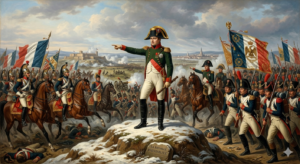
Into this environment stepped Napoleon Bonaparte.
His military victories made him enormously popular.
In 1799, he seized power through a coup.
Over time, Napoleon concentrated authority in his own hands and eventually crowned himself Emperor.
This raises an important question.
Had the revolution truly succeeded if France ended up under another powerful ruler?
Historians continue to debate the answer.
Was the French Revolution a Success?
The answer depends on how success is defined.
Reasons It Was Successful
- Ended feudal privileges.
- Promoted equality before the law.
- Spread democratic ideas.
- Inspired future movements for freedom.
Reasons It Fell Short
- Led to political instability.
- Caused widespread violence.
- Produced the Reign of Terror.
- Eventually resulted in Napoleon’s rule.
The revolution achieved many of its goals, but often at an enormous human cost.
The Global Impact of the French Revolution
The influence of the French Revolution extended far beyond France.
It inspired:
- Democratic reforms throughout Europe.
- Independence movements in Latin America.
- Nationalist movements across the world.
- Modern concepts of citizenship and human rights.
Many political ideas that people consider normal today gained strength because of the events that unfolded in France between 1789 and 1799.
Lessons from the French Revolution
The French Revolution offers lessons that remain relevant even today.
Extreme Inequality Creates Instability
When wealth and opportunity become concentrated in the hands of a few, social tensions often increase.
Governments Must Adapt
Political systems that refuse reform may eventually face far more dramatic change.
Ideas Can Change History
The writings of philosophers helped reshape an entire nation.
Revolutions Have Unintended Consequences
Movements that begin with noble goals can sometimes produce unexpected outcomes.
Conclusion
The French Revolution began with hunger, inequality, and demands for change. What followed was one of the most dramatic transformations in human history.
A powerful monarchy collapsed. Ancient privileges disappeared. Revolutionary ideas spread across continents. Yet the revolution also revealed the dangers of extremism, political violence, and unchecked power.
More than two centuries later, the French Revolution continues to fascinate historians because it raises questions that remain relevant today.
How much inequality can a society tolerate? How should power be distributed? Can freedom be achieved without conflict?
The French Revolution did not provide simple answers. But it permanently changed the way people think about government, rights, and the relationship between rulers and citizens.
Its story is not merely the story of France.
It is the story of the modern world being born.
Before his execution, King Louis XVI faced immense political pressure and criticism. To understand his life, leadership, and role in the French Revolution, read our detailed guide on Louis XVI: The Last King of France.
The French monarchy was not the first powerful system to collapse under internal problems. A similar story can be seen in The Rise and Fall of the Roman Empire, where political instability, economic troubles, and leadership failures gradually weakened one of history’s greatest empires.
For a deeper academic overview of the French Revolution, readers can explore the detailed resources available from Encyclopaedia Britannica.