
Introduction
The sea was rough.
Dark clouds covered the sky as a giant wooden ship slowly moved toward the Indian coast. The sailors onboard were tired, hungry, and exhausted after months at sea. Some had fallen sick during the journey. Some had already died before seeing land again.
But the men standing on that ship were not turning back.
Because ahead of them was India — a land famous for wealth, spices, textiles, and trade.
These men were not kings or conquerors in the beginning.
They were Dutch traders.
When people talk about colonial India, the British usually dominate the conversation. Sometimes the Portuguese are remembered too. But hidden deep inside Indian history is another fascinating story — the story of the Dutch in India.
For nearly 200 years, the Dutch built ports, controlled trade routes, fought rivals, and became one of the richest powers in Asia. Yet today, their story feels almost forgotten.
So how did a small European country travel thousands of kilometers to India and become so powerful? And why did their dream eventually collapse?
Let’s uncover the forgotten story of the Dutch in India.
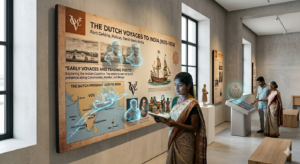
1. Why the Dutch Came to India
In the 16th and 17th centuries, Europe was desperate for spices.
Today, spices are normal kitchen items. But hundreds of years ago, spices like pepper, cinnamon, nutmeg, and cloves were extremely valuable. Rich European families paid huge amounts to buy them.
At that time, the Portuguese controlled most spice trade routes between Europe and Asia. They were becoming incredibly rich.
The Dutch watched this carefully.
They realized one important thing:
If they could directly trade with India and Asia, they could earn massive profits themselves.
This dream led to the creation of the Dutch East India Company in 1602, also known as the VOC.
The company was unlike anything the world had seen before.
It could:
- Build forts
- Own ships
- Create armies
- Sign treaties
- Fight wars
It was not just a business.
It was almost a government.
And soon, Dutch ships started sailing toward India.
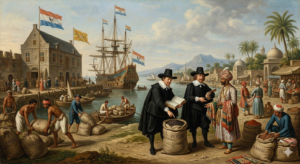
2. The First Arrival of the Dutch in India
The first Dutch traders arrived in India during the early 17th century.
Unlike the British later, the Dutch were mainly focused on business and trade. They were searching for ports where they could safely buy and sell goods.
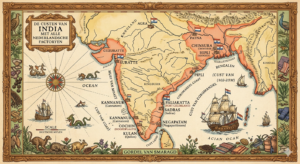
Slowly, the Dutch in India established trading centers in:
- Surat
- Pulicat
- Cochin
- Nagapattinam
- Chinsurah
Among all these places, Pulicat became the main headquarters of the Dutch in India.
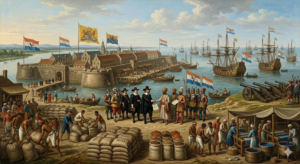
This small coastal town soon transformed into a busy trading hub filled with warehouses, merchants, ships, and markets.
Indian cotton, silk, spices, and indigo were loaded onto Dutch ships and sent across the world.
The Dutch quickly understood something very important:
India was not just another country.
It was one of the richest trading regions on Earth.
3. The Dangerous Life of Dutch Sailors
When we read history today, trade sounds simple.
But during the 1600s, traveling from Europe to India was extremely dangerous.
Dutch sailors spent months trapped inside wooden ships surrounded by endless ocean.
Food often rotted.
Water became dirty.
Diseases spread quickly.
Many sailors never survived the journey.
Storms in the Indian Ocean destroyed ships without warning. Pirates attacked trading vessels. Rival European powers waited for opportunities to capture cargo.
Even after reaching India, life was difficult.
The heat and climate were very different from Europe. Many Dutch traders struggled to adjust.
But despite all these dangers, they kept coming.
Why?
Because the profits were enormous.
One successful journey from India could make a merchant rich for life.
4. How the Dutch in India Became Powerful
The Dutch were extremely smart traders.
Instead of focusing only on one region, they built a giant trade network connecting:
- India
- Indonesia
- Sri Lanka
- Africa
- Europe
Indian textiles became one of their biggest sources of profit.
At that time, Indian cloth was famous worldwide because of its quality and beauty. Dutch merchants bought huge amounts of cotton textiles from Indian markets and sold them in other Asian countries and Europe.
The Dutch in India also became powerful because of their strong navy.
Their ships controlled important sea routes and protected valuable cargo. Slowly, they started challenging Portuguese power in Asia.
For some time, the Dutch looked unstoppable.
5. The Dutch vs Portuguese Struggle in India
The Portuguese were the first major European power in India.
But the Dutch wanted to replace them.
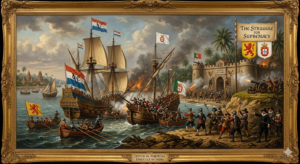
Soon, violent battles started across the Indian Ocean.
Dutch ships attacked Portuguese fleets.
Portuguese soldiers defended their ports.
Trade routes became war zones.
The fight was not only about territory.
It was about money.
Whoever controlled Indian trade controlled enormous wealth.
The Dutch eventually captured important places like Cochin from the Portuguese. Slowly, Portuguese influence weakened while Dutch power increased.
For many years, the Dutch in India became one of the strongest foreign trading powers on the Indian coastline.
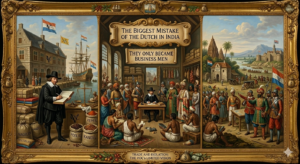
6. The Biggest Mistake of the Dutch in India
Even though the Dutch became successful traders, they made one major mistake.
They focused mostly on profit.
Meanwhile, another European power was thinking much bigger — the British.
The British East India Company slowly started interfering in Indian politics. They built armies, formed alliances with local rulers, and expanded their military strength.
The Dutch mostly stayed businessmen.
The British became rulers.
This difference completely changed the future of India.
While the Dutch concentrated on trade, the British were building an empire.
And slowly, British power started growing faster than everyone expected.
7. The Fall of Dutch Power in India
The decline of the Dutch in India became clear after the Battle of Chinsurah in 1759.
The Dutch tried to challenge British expansion, but they were badly defeated.
After this battle, British dominance increased rapidly while Dutch influence weakened.
There were several reasons behind the fall of the Dutch in India:
They Focused More on Indonesia
The Dutch cared more about controlling the spice islands of Indonesia than ruling India.
Weak Political Influence
Unlike the British, the Dutch did not deeply involve themselves in Indian politics.
Growing British Military Power
The British built stronger armies and used local alliances very effectively.
Corruption Inside the VOC
Over time, the Dutch East India Company became financially weak and poorly managed.
Slowly, the dream of a Dutch trading empire in India started disappearing.
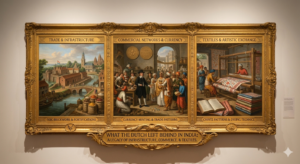
8. What the Dutch Left Behind in India
Even today, the story of the Dutch in India is not completely lost.
Old Dutch buildings, cemeteries, churches, and forts still survive in some parts of India.
Places like:
- Pulicat
- Kochi
- Chinsurah
still carry traces of Dutch history.
These silent structures remind us that centuries ago, India was connected to global trade routes long before modern globalization existed.
Behind every old fort and broken wall was a story of sailors, merchants, ambition, and survival.
9. Why the Story of Dutch in India Still Matters
The history of the Dutch in India teaches us something important.
Power does not last forever.
At one point, the Dutch East India Company was among the richest organizations in the world. Its ships traveled across oceans, and its traders controlled major trade routes.
But even such a powerful company eventually declined.
History changed.
New powers rose.
Old empires disappeared.
That is why the Dutch story is so fascinating.
It reminds us how quickly success can fade when strategies fail and rivals become stronger.
Conclusion
The Dutch arrived in India searching for spices, wealth, and opportunity.
For nearly two centuries, they became an important part of Indian trade and maritime history. Their ports were busy, their ships powerful, and their company incredibly rich.
But in the end, the Dutch in India could not compete with the rising British Empire.
Today, only a few old buildings and forgotten stories remain.
Yet if we look carefully at history, we can still hear echoes of those Dutch ships arriving on Indian shores — carrying dreams of fortune across dangerous seas.
And that is what makes the story of the Dutch in India unforgettable.
Tap Here to get knowledgeable blog about 10 Historical fact that sound fake but are actually true.
Tap Here to get best blog about Greek Astronomers and Equal Hours
Tap Here to learn about Dutch Language as peer Wikipedia.