1. Introduction
“Very few kings in history lost not only their throne but also their entire kingdom. Louis XVI was one of them.”
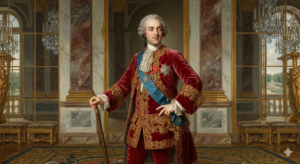
History often remembers kings as powerful rulers who changed the world through wars and victories. But the story of Louis XVI is very different. He was not a fearless warrior or a brilliant politician. He was a quiet and uncertain man who became king during one of the most difficult periods in French history.
When Louis XVI became king in 1774, France already had serious problems. The country looked rich from the outside because of the beauty of Versailles and the luxurious royal lifestyle. But behind that shine, ordinary people were struggling with hunger, poverty, and unfair taxes.
Louis XVI probably never imagined that his reign would end with revolution and execution. Yet his downfall became one of the biggest turning points in world history because it also marked the fall of the French monarchy.
2. Early Life of Louis XVI
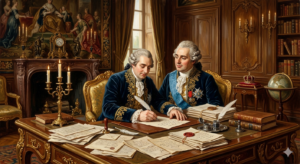
Louis XVI was born in 1754 as Louis-Auguste. As a child, he was not expected to become king quickly. He was shy, serious, and different from most royal princes. Instead of enjoying attention and luxury all the time, he liked reading books, studying geography, and working with tools and locks.
After the deaths of his father and older brother, Louis suddenly became the heir to the throne. This changed his life completely.
People around him believed he was intelligent, but he lacked confidence. He often struggled to make decisions, and this weakness later created major problems when France entered a national crisis.
3. Marriage to Marie Antoinette
At the age of fifteen, Louis married Marie Antoinette from Austria. Their marriage was political because it was meant to improve relations between France and Austria.
At first, the young couple attracted public attention and admiration. But over time, Marie Antoinette became unpopular among the French people. Many believed she spent too much money on dresses, jewelry, and expensive parties while ordinary citizens struggled to survive.
Even though many stories about her were exaggerated, people saw the queen as a symbol of royal luxury and wasteful spending. This public anger slowly damaged the image of the monarchy itself.
“For many ordinary French citizens, the royal family started looking completely disconnected from reality.”
4. Louis XVI Becomes King
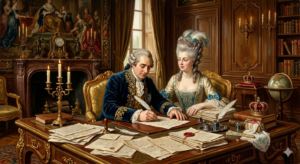
In 1774, after the death of Louis XV, Louis XVI became King of France at only twenty years old.
Many citizens hoped the young king would improve the country. France had already suffered from corruption, financial problems, and expensive wars. Louis himself understood that reforms were necessary.
However, solving France’s problems was not easy. The country was heavily in debt, and the tax system was unfair. Poor people paid heavy taxes, while nobles and church leaders enjoyed special privileges.
Several advisors suggested reforms, including changes to taxation and government spending. But powerful nobles opposed these reforms because they feared losing their privileges.
Instead of standing strongly behind the reforms, Louis often changed his decisions under pressure. This made him appear weak and uncertain.

5. France and the American Revolution
One of the most important events during Louis XVI’s reign was France’s involvement in the American Revolutionary War.
France supported the American colonies in their fight against Britain. The French government hoped to weaken Britain after previous military defeats.
America eventually won independence, and France celebrated the victory. But the war cost France enormous amounts of money and pushed the country deeper into debt.
At the same time, French soldiers returned home inspired by ideas of freedom, equality, and democracy. These revolutionary ideas slowly spread across France.
Ironically, by helping America become free, Louis XVI unknowingly encouraged revolutionary thinking in his own country.
6. Economic Crisis and Public Anger
By the late 1780s, France was facing a severe economic crisis. Poor harvests caused food shortages, and the “For poor families, even buying bread became a daily struggle.” People slowly began blaming the monarchy for their suffering.
Many ordinary people struggled daily just to survive.
Meanwhile, the royal court at Versailles continued living in luxury. Expensive parties and royal celebrations made the monarchy appear disconnected from public suffering.
Slowly, frustration turned into anger.
Writers and philosophers criticized the monarchy and demanded equality and rights for ordinary citizens. Pamphlets attacking the king and queen spread across the country.
France was becoming increasingly unstable.
7. Beginning of the French Revolution
“The storming of the Bastille showed that people had stopped fearing the king.” In 1789, facing financial collapse, Louis XVI called the Estates-General, an assembly representing the three groups of French society:
- The clergy
- The nobility
- The common people
This was the first meeting of the Estates-General in more than 170 years.
At first, many hoped it would peacefully solve France’s problems. Instead, it created even greater conflict.
Representatives of ordinary people demanded fair political representation and more power. When their demands were ignored, they declared themselves the National Assembly.
Soon after, tensions exploded across Paris.
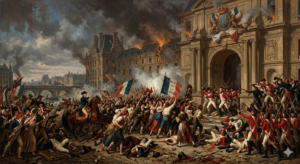
On July 14, 1789, angry crowds stormed the Bastille prison. Although very few prisoners were inside, the Bastille symbolized royal power and oppression.
The storming of the Bastille became one of the most famous events of the French Revolution.
“France was entering a completely new era.”

8. The King Louis XVI Begins Losing Control
As the revolution became stronger, Louis XVI appeared confused and uncertain. Sometimes he accepted revolutionary reforms, while at other times he secretly hoped foreign monarchies would help restore his power.
This inconsistency destroyed public trust.
In 1791, the royal family secretly attempted to escape France in the famous Flight to Varennes. They hoped to reach safety near the border.
However, the king was recognized during the journey and captured before escaping successfully.
This event shocked the nation.
Many citizens who still supported the monarchy now believed Louis XVI had betrayed France. Public trust in the king nearly disappeared. “Public anger was now becoming dangerous.”
9. Fall of the French Monarchy
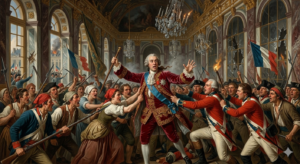
By 1792, France had entered a dangerous period of violence and political chaos. European monarchies threatened France, while revolutionaries inside the country became more radical. “People were slowly losing trust in the monarchy.”
Revolutionary crowds attacked the royal palace, and Louis XVI was imprisoned with his family.
Soon afterward, the monarchy was officially abolished.
For centuries, French kings had ruled with great power. Now that system had completely collapsed.
Louis XVI was no longer called king. Revolutionaries simply referred to him as Citizen Louis Capet.
10. Trial and Execution of Louis XVI
The former king was placed on trial for treason. Revolutionaries accused him of secretly helping foreign enemies and betraying the French nation.
After long debates, he was declared guilty.
On January 21, 1793, Louis XVI was executed by guillotine in Paris.
Witnesses said he remained calm during his final moments. Before his execution, he attempted to speak to the crowd and forgive his enemies, but the sound of drums drowned out his voice.
His death shocked all of Europe.
For many monarchies, the execution of a king was almost unimaginable. They feared revolutionary ideas might spread to their own countries.
A few months later, Marie Antoinette was also executed.
11. Why Louis XVI Failed as a Ruler
There were several reasons why Louis XVI failed to save the monarchy.
11.1 Weak Leadership
Louis XVI struggled to make strong and quick decisions during times of crisis.
11.2 Financial Problems
France’s enormous debt and unfair taxation system created serious economic instability.
11.3 Resistance from Nobles
Powerful nobles opposed reforms because they wanted to protect their privileges.
11.4 Public Anger
Rising poverty, hunger, and inequality caused ordinary people to lose trust in the monarchy.
11.5 Revolutionary Ideas
Ideas about democracy, equality, and freedom inspired people to challenge royal authority.
12. Legacy of Louis XVI
Today, Louis XVI is remembered as one of history’s most tragic rulers. He was not a cruel monster, but he lacked the leadership needed during a national crisis.
His reign showed how dangerous inequality, hunger, and political failure can become when leaders fail to respond effectively.
The French Revolution changed not only France but also the modern world. Revolutionary ideas about equality and citizens’ rights spread across Europe and influenced future democratic movements.
Although Louis XVI lost his throne and his life, the events during his reign reshaped world history forever.
13. Conclusion
“The story of Louis XVI proves that a kingdom cannot survive for long when leaders fail to understand the struggles of ordinary people.” When Louis XVI became king in 1774, people hoped he would bring reform and stability to France. Instead, his reign became connected with financial crisis, revolution, and the collapse of the monarchy.
Louis XVI was not naturally cruel, but his indecisive leadership and failure to solve France’s growing problems weakened the kingdom beyond repair.
His story is not only about the fall of one king. It is also the story of how an old political system collapsed and how revolutionary ideas changed the future of humanity forever.