
Introduction
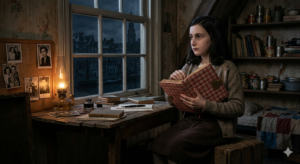
“In a small hidden house in Amsterdam…”, a teenage girl sat beside a window she could barely open. Outside, the world was filled with fear, soldiers, and war. Inside, she had only a diary, a pen, and her thoughts.
She was not a queen, a warrior, or a politician. She was just a young girl trying to survive one of the darkest periods in human history. Yet decades later, her words would travel across the world and touch millions of hearts.
This is the emotional and unforgettable story of Anne Frank — the girl whose diary became a voice for humanity.
1. Who Was Anne Frank?
Anne Frank was born on June 12, 1929, in Frankfurt. She was born into a Jewish family during a time when Europe was slowly changing under the rise of hatred and dictatorship.
Anne was cheerful, curious, and full of energy. She loved talking, laughing, and writing stories. Her father, Otto Frank, often described her as intelligent and deeply thoughtful. Her mother, Edith, was calm and caring, while her older sister Margot was quiet and disciplined.
At first, Anne’s childhood looked normal. She went to school, played with friends, and dreamed like every young girl. But outside her home, dangerous political changes were beginning.
In Germany, Adolf Hitler and the Nazi Party were gaining power. Jewish families soon became targets of discrimination, fear, and violence.
The Frank family realized they were no longer safe.
2. A Family Forced to Escape
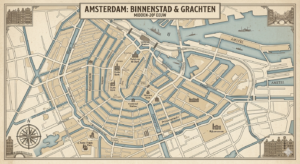
In 1933, Otto Frank made a difficult decision. He moved his family from Germany to the Netherlands, hoping for safety and peace.
The family settled in Amsterdam. For a while, life became normal again. Anne attended school, made friends, and enjoyed the freedom of her new home.
But peace did not last long.
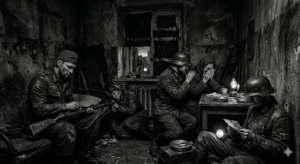
In 1940, Nazi Germany invaded the Netherlands during World War II. Slowly, strict laws were forced upon Jewish people.
Jewish children could not attend normal schools.
Jewish families could not enter parks, cinemas, or restaurants.
They had to wear yellow stars on their clothes.
Every new rule took away another piece of freedom.
Anne was still a young girl, but she could already feel fear growing around her life.
3. Anne Frank and Her Famous Diary
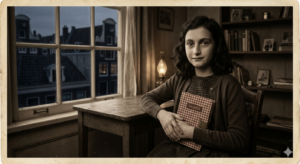
On her thirteenth birthday, Anne received a red-checkered diary as a gift. She immediately loved it.
She named the diary “Kitty” and began writing to it as if it were a close friend.
At first, her diary contained ordinary teenage thoughts. She wrote about school, boys, arguments with her mother, and dreams for the future.
But soon, her diary became something much deeper.
It became her safest place.
Anne once wrote that paper had more patience than people. In a world where she could not speak freely, writing became her escape.
She did not know it then, but her private thoughts would later become one of the most important books in modern history.
4. Inside Anne Frank House: Life in the Secret Annex
From outside, the building looked like an ordinary house in Amsterdam. Nobody could imagine that behind a movable bookshelf, eight people were secretly hiding from Nazi soldiers. The hidden rooms were small, silent, and filled with fear, yet this secret house later became one of the most important historical places in the world.
In July 1942, the Frank family suddenly disappeared from public life.
The Nazis had ordered Margot Frank to report for a labor camp. Otto Frank knew what that truly meant. The family had to hide immediately.
Behind Otto Frank’s office building in Amsterdam was a hidden space later known as the Secret Annex.
The entrance was hidden behind a movable bookshelf.
Inside the annex, Anne lived with her family and four other people for more than two years.
The rooms were tiny.
The windows stayed covered.
During the day, they had to remain completely silent so workers downstairs would not hear them.
Imagine being a teenager unable to laugh loudly, step outside, or even look freely at the sky.
Anne missed sunlight.
She missed freedom.
She missed being normal.
Yet even in darkness, she continued writing.
5. Daily Fear Inside the Secret Annex
Every sound inside the annex felt dangerous.
Footsteps downstairs could cause panic.
Airplanes flying overhead reminded everyone of war.
At night, Anne often heard sirens, bombs, and gunfire.
Food became scarce. Sometimes they survived on rotten potatoes and old vegetables.
Arguments often broke out inside the hidden rooms because stress and fear were constant companions.
Anne struggled emotionally during this time. She felt misunderstood and lonely. Yet she also grew wiser and more mature through writing.
Her diary slowly transformed from the thoughts of a child into the reflections of a young writer trying to understand humanity.
One of the most powerful parts of Anne Frank’s story is that she still believed in goodness despite living in fear.
That hope made her words unforgettable.
6. Anne Frank Story and Her Dream of Becoming a Writer
Many people only know Anne as a victim of war. But Anne Frank wanted something much bigger.
She dreamed of becoming a journalist and famous writer.
While hiding, she heard a radio broadcast saying people should preserve wartime documents after the war ended. That message inspired Anne deeply.
She began rewriting and editing her diary carefully.
She wanted the world to read her story one day.
This hidden detail makes Anne Frank’s story even more emotional. She was not simply writing random thoughts. She was shaping her life into something meaningful.
A teenage girl trapped inside hidden rooms was already thinking like a true author.
Her dream would eventually come true — though she would never live to see it.
7. The Day Everything Changed
On August 4, 1944, the Secret Annex was discovered.
To this day, historians still debate exactly who betrayed the hiding place.
Nazi officers entered the annex and arrested everyone inside.
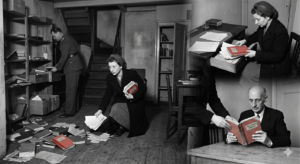
Anne’s diary papers were left scattered on the floor.
The families were taken away and separated.
Anne and Margot were eventually sent to the Bergen-Belsen concentration camp in Germany.
Conditions there were horrific.
Disease, hunger, cold weather, and overcrowding killed thousands of prisoners.
Anne Frank died in early 1945 at only fifteen years old, just weeks before the camp was liberated.
Her sister Margot died shortly before her.
The war was almost over, but Anne never got the chance to see freedom again.
8. How Anne Frank’s Diary Survived
After the arrest, one of the helpers who had protected the families, Miep Gies, collected Anne’s diary papers and saved them.
She hoped to return them to Anne after the war.
But Anne never came back.
Otto Frank became the only surviving member of the Frank family.
When Miep gave him Anne’s diary, he read the words of his daughter for the first time.
He discovered her fears, dreams, intelligence, and emotional struggles.
Otto was deeply moved.
He decided the world needed to hear Anne’s voice.
In 1947, Anne’s diary was published.
Slowly, readers across the world connected with her story.
Today, her diary has been translated into dozens of languages and remains one of the most widely read books in history.
9. Why Anne Frank’s Story Still Matters Today
The story of Anne Frank is not only about the past.
It is also a warning for the future.
Her diary teaches humanity about the dangers of hatred, racism, and discrimination.
Anne reminds readers that war destroys ordinary lives — especially children.
Even today, young people around the world continue reading her diary because her emotions feel real and timeless.
She wrote about fear.
She wrote about loneliness.
She wrote about hope.
These feelings still connect with people generations later.
In a world filled with conflict and division, Anne Frank’s words continue to encourage kindness and understanding.
10. Anne Frank House: The Hidden Home That Became a Museum
Today, the hiding place where Anne lived has become the famous Anne Frank House museum.
Millions of visitors walk through the narrow rooms every year.
The hidden bookshelf still stands there.
The walls still carry memories of the people who once lived in silence.
Photographs Anne pasted on her bedroom wall can still be seen.
The museum also uses modern digital education projects and virtual tours to teach younger generations about history and human rights.
Even decades later, the small annex continues speaking to the world.

11. Untold Facts About Anne Frank
Anne Edited Her Own Diary
Many people do not know that Anne rewrote parts of her diary herself because she hoped to publish it someday.
She Loved Movie Stars
Anne enjoyed collecting pictures of actors and celebrities to decorate her room.
Silence Was Strict
During office hours, the people hiding had to walk softly and avoid making noise.
She Loved Nature
Anne deeply missed trees, fresh air, and open skies while hiding.
Her Diary Was Never Meant to Become Famous
It began simply as the private thoughts of a lonely teenager.
These small details make Anne Frank’s story feel deeply human rather than distant history.
12. Lessons We Can Learn From Anne Frank
Anne Frank’s life was short, but her message became eternal.
She teaches us:
- Never allow hatred to grow silently
- Freedom should never be taken for granted
- Words can survive even when people cannot
- Hope can exist even in darkness
Perhaps the most heartbreaking part of Anne’s story is knowing how much potential she carried inside her.
She wanted to live.
She wanted to write.
She wanted to become something great.
And through her diary, she finally did.
Conclusion
The story of Anne Frank is not simply a chapter from World War II history. It is the story of courage hidden inside an ordinary teenage girl.
While armies fought battles outside, Anne fought her own battle against fear, silence, and hopelessness using only words.
Her diary became proof that even during humanity’s darkest moments, kindness and hope can still survive.
Anne Frank never imagined the world would one day read her thoughts.
Yet today, generations continue hearing her voice through the pages she left behind.
And perhaps that is why her story will never disappear.
Tap Here to get a fantastical and knowledgeable blog about Louis XVI.